
Last updated October 16, 2026
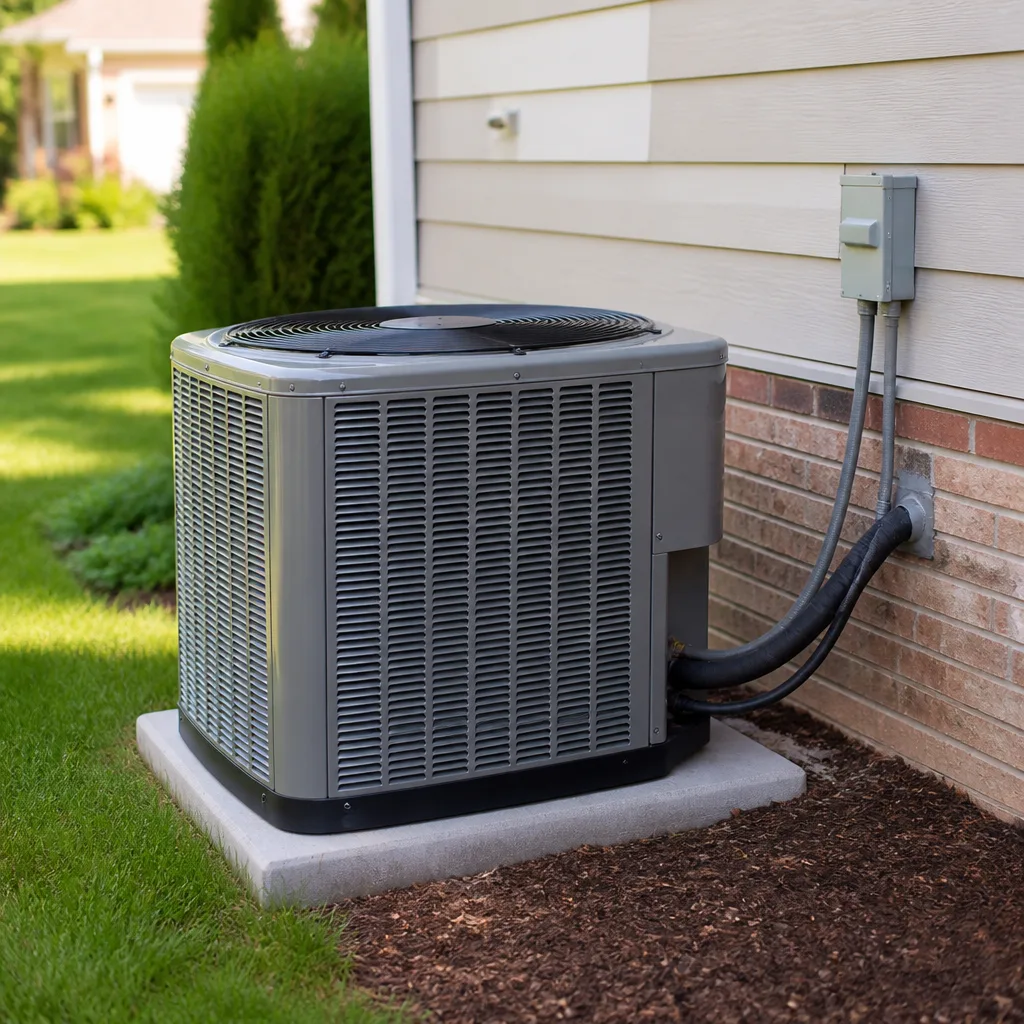 AC repair
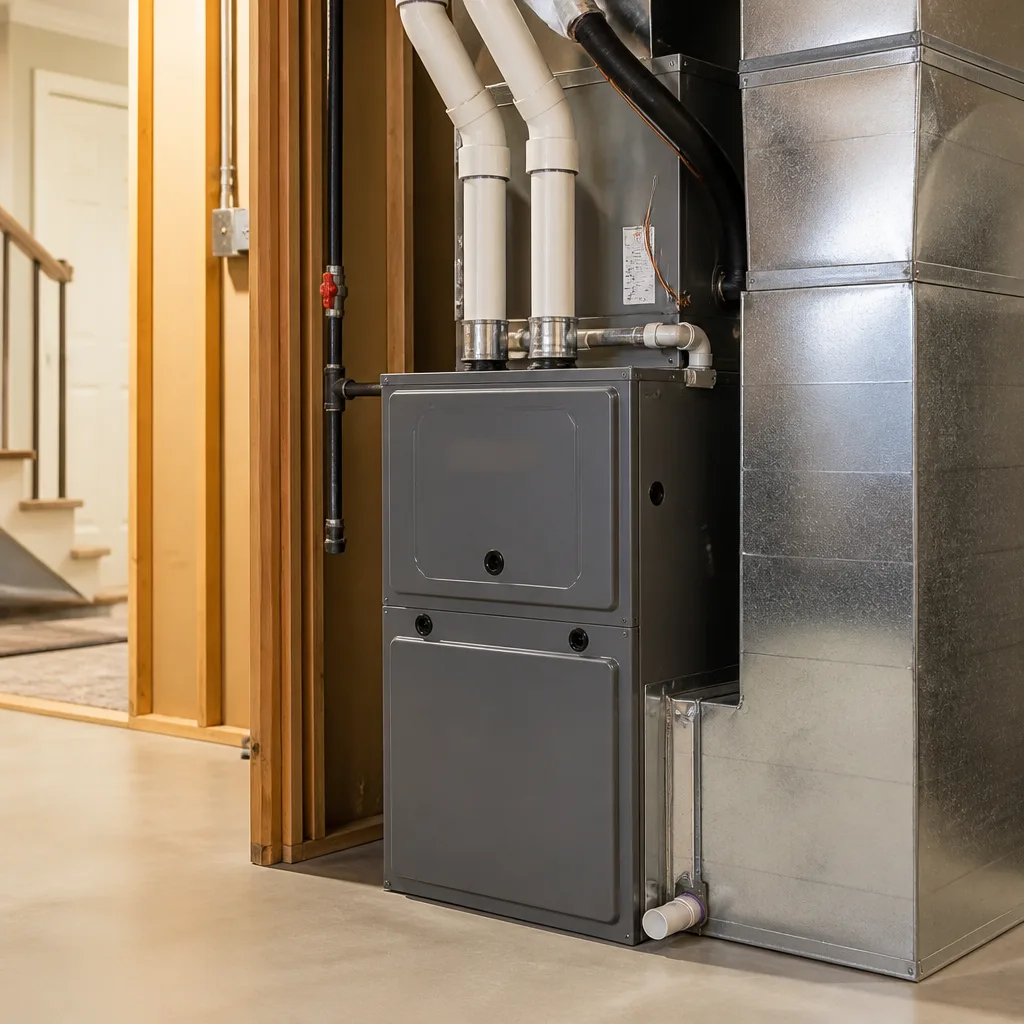 Furnace & heating
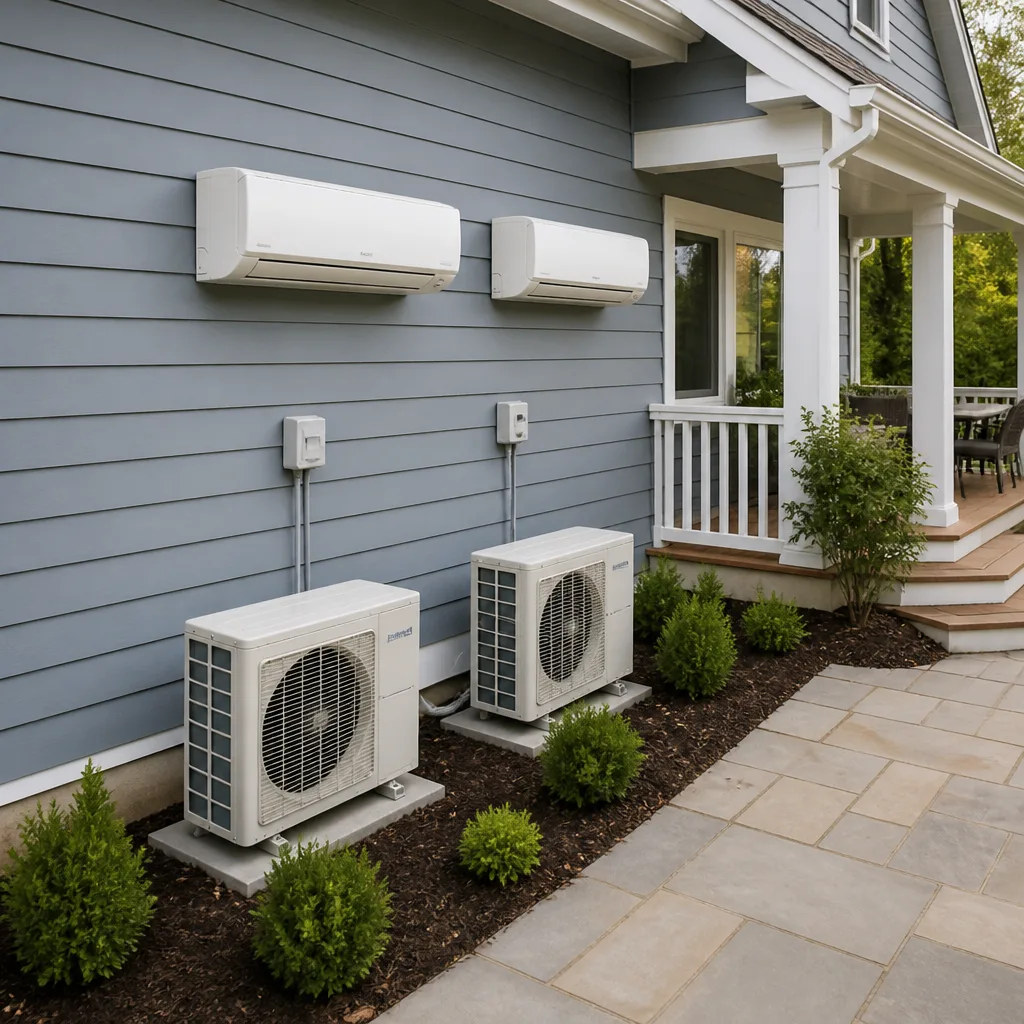 Ductless mini splits
 Carrier
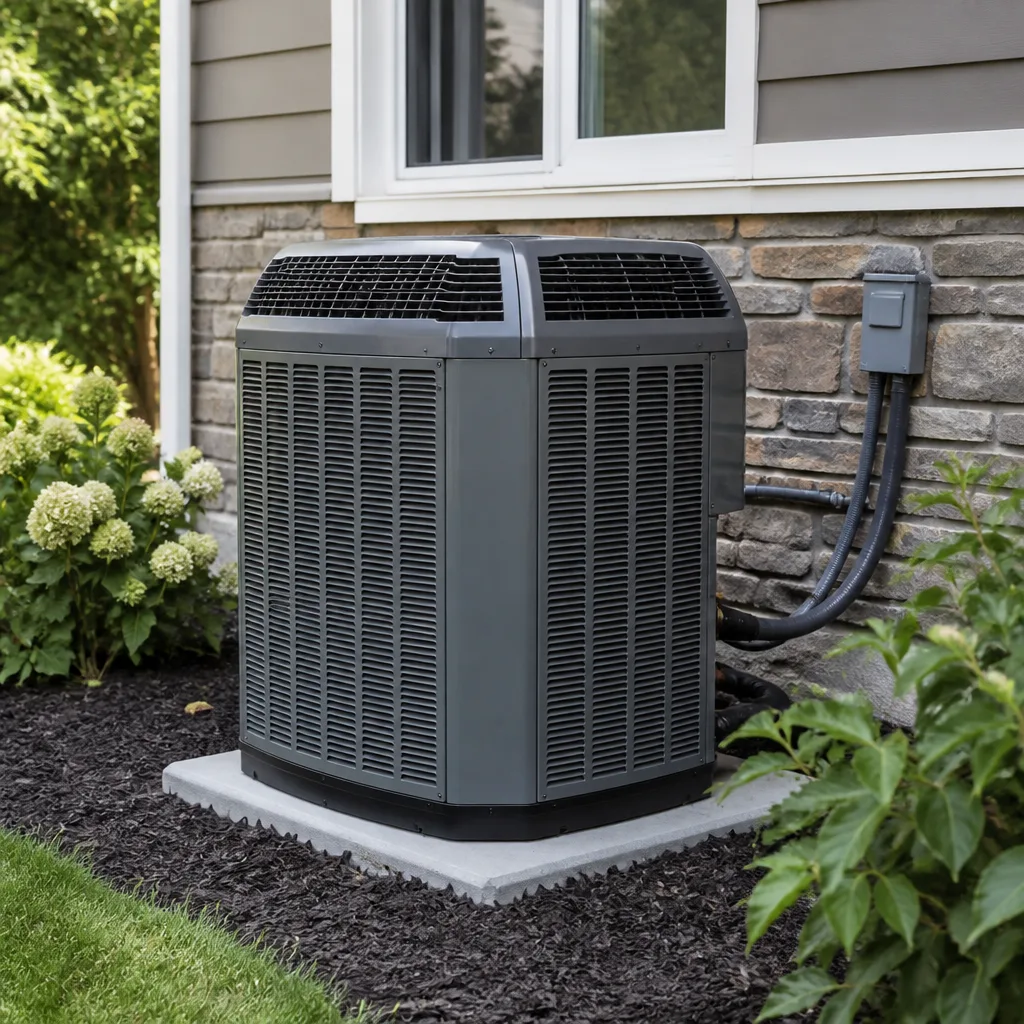 Trane
Trane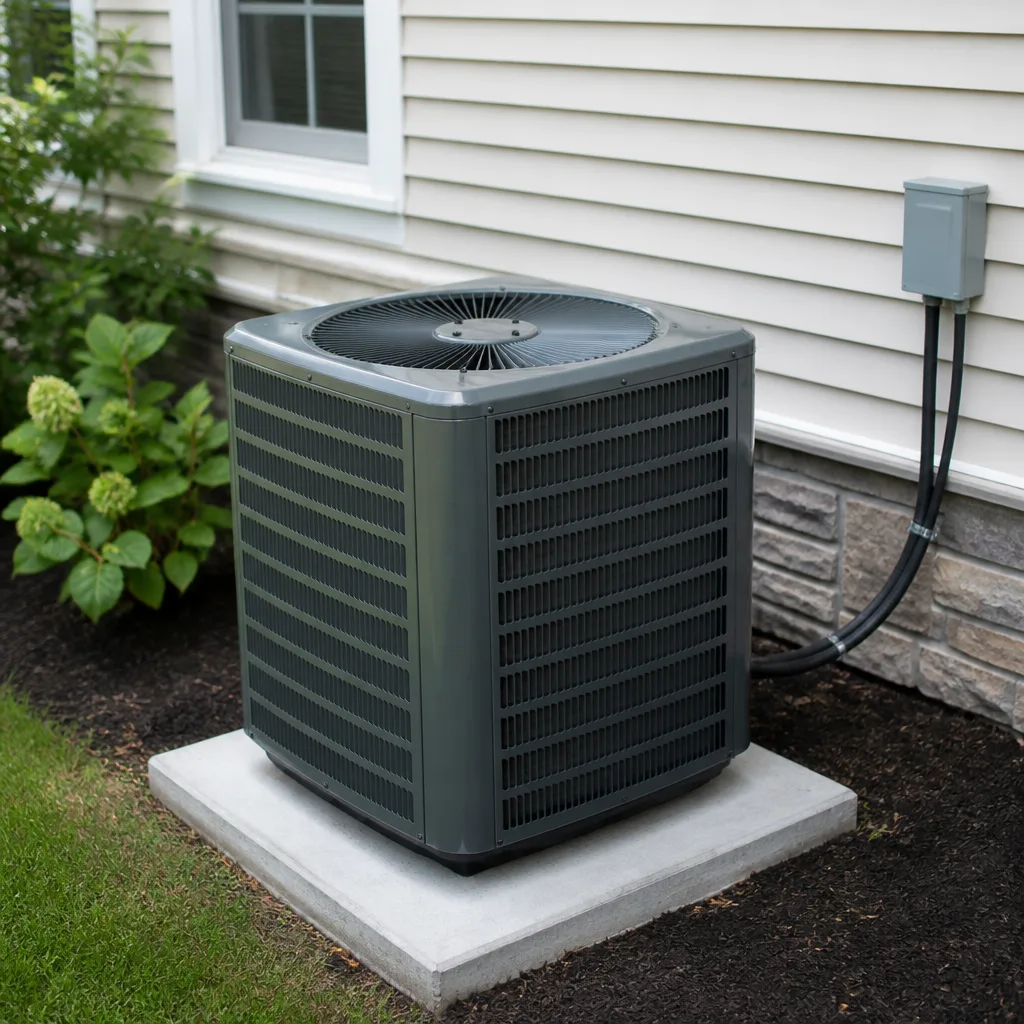 Goodman
Seasonal tune-up and full diagnostic on your Carrier, Trane, or Goodman system - readings shown to you before any repair is proposed
Diagnosis first, numbers second - you approve the repair price before a single part goes in.
Get your free estimateHow to Hire a HVAC Contractor in West Covina: A Step-by-Step Guide
California hands out C-20 HVAC licenses to thousands of contractors, but that license won’t tell you whether the person knocking on your door in West Covina quotes you a price you can actually hold them to. A licensed contractor can still give you a verbal estimate at 9 a.m. and an invoice that’s 60 percent higher at 4 p.m., and nothing about that violates state code. This guide shows you the exact questions to ask, the three documents you need before anyone touches your thermostat, and the HVAC Warning Signs: A West Covina Homeowner’s Reference Guide that spike across neighborhoods every time a heat wave rolls through the San Gabriel Valley.
Quick Answer
Hiring an HVAC contractor in West Covina comes down to three verifications: confirm the C-20 license and complaint history on the CSLB website, demand a written fixed price before any work begins, and refuse any contractor who won’t perform a Manual J load calculation on an installation quote. A solid contractor hands you the paperwork before you ask. The wrong one gets vague when you push for specifics.
Styles & brands we work with
Table of Contents
- Step 1: Verify the C-20 License and Complaint History
- Step 2: The Three Documents You Need Before Work Starts
- Step 3: Flat-Rate Pricing vs. Time and Materials
- Step 4: Why a Manual J Load Calculation Is Non-Negotiable
- Step 5: Red Flags Specific to West Covina’s Door-to-Door Season
- Step 6: The Five Questions That Expose a Sloppy Contractor
- Step 7: Warranty and Guarantee Terms You Can Actually Enforce
- Common Mistakes to Avoid
- When to Call a Professional
- Frequently Asked Questions
- The Bottom Line
Step 1: Verify the C-20 License and Complaint History
Every legitimate HVAC contractor operating in West Covina carries a C-20 Warm-Air Heating, Ventilating and Air-Conditioning Contractor license issued by the California Contractors State License Board, called the CSLB for short. That’s the state agency that regulates the trade, and their public database is the single most useful two-minute check you can run before signing anything. Here’s the part most homeowners skip: the license number proves the person is legally allowed to work. It does not prove they’ll honor a verbal quote or show up when they say they will.
Go to the CSLB website, find the “Check a Contractor’s License” tool, and type in the license number. You’ll see the license status, the issue and expiration dates, whether the company carries workers’ compensation insurance, and any disciplinary actions or complaints filed against them. A license that shows “Active” is the baseline. Anything else: walked away. No exceptions.
In West Covina specifically, the age of the housing stock matters. Large pockets of the city were built out in the 1950s and 1960s, which means ductwork is older, insulation is thinner, and electrical panels are sometimes undersized for modern equipment. That doesn’t mean you need a specialist for older homes, but it does mean you want a contractor who has worked in the San Gabriel Valley long enough to know what older construction looks like. Ask directly: “How many homes in this part of West Covina have you serviced in the last year?” A vague answer tells you more than a good one.
One more thing worth knowing: the CSLB database also shows whether a contractor’s workers’ comp policy is current. If a technician injures themselves on your property and the contractor doesn’t carry workers’ comp, that becomes your homeowner’s insurance problem. Checking this takes thirty extra seconds. It’s worth it every single time.
Step 2: The Three Documents You Need Before Work Starts
Here’s where we draw a hard line as a West Covina contractor: no technician from our company picks up a tool before you have three things in your hand, in writing. If a contractor won’t produce these, thank them for their time and call someone else. There’s no middle ground.
Document one: a written fixed price for the specific repair or install. Not a range. Not a verbal ballpark. A number, on paper or in an email, with the scope of work spelled out. In our experience, the gap between a verbal estimate and a final invoice is where most homeowner disputes start. A written price closes that gap before it opens.
Document two: the written guarantee terms for the repair or installation. This is where you learn what actually matters: how long the warranty runs, what it covers, and what happens if the same part fails again in three months. Contractors who offer only the manufacturer’s parts warranty are missing the labor piece, and labor is often the more expensive half of a callback. Ask: “Is labor covered in writing, and for how long?” Every repair done by Halden Heating and Air West Covina includes a written guarantee and a free second visit if the repair fails, and both of those come standard, not as a paid add-on.
Document three: the contractor’s working details in writing. License number, business address, and a contact person who answers the phone. If the contractor is a solo operator with a PO box and a cell phone that goes to voicemail after 5 p.m., that’s not automatically disqualifying, but the written price and written guarantee both become harder to enforce. Bigger picture: you want someone you can reach in August when the AC stops in the middle of a West Covina heat spike and you need a live human, not a callback request form.
In short: if the paperwork feels like a hassle to them, that tells you how they’ll handle the work itself.
Step 3: Flat-Rate Pricing vs. Time and Materials
This distinction matters more than any brand-name familiarity. Most HVAC contractors in West Covina bill one of two ways, and the difference is the single strongest predictor of whether your invoice will match your expectation.
Time and materials means you pay for the technician’s hours plus whatever parts get used, at whatever rate the shop sets. The final number depends on how fast the tech works, how many trips the job takes, and what the parts desk charges that week. That’s not automatically unfair, but it is inherently unpredictable. You agree to the open-ended risk before you see the bill.
Flat-rate pricing means the contractor quotes a fixed number for the job before starting, based on what the task is rather than how long it takes. The risk shifts from you to the contractor. If the job runs long, they eat the hours. This is how our shop works in West Covina: written price before any work starts, every single time, no exceptions at the door. Most AC repairs in this area run between $150 and $500 depending on the part, and a flat-rate shop will tell you that range in advance-see our HVAC Cost Breakdown: The West Covina Homeowner’s Reference for 2026 for more detail.
Here’s the test question: “Is this quote flat-rate, or am I paying by the hour?” Then follow with what matters: “Does the written estimate include everything, including any disposal fees or trip charges?” You’d be surprised how often a low bid turns into a higher final bill because the disposal fee wasn’t in the original number.
Step 4: Why a Manual J Load Calculation Is Non-Negotiable
On any AC installation or replacement quote in West Covina, the contractor should perform a Manual J load calculation. Manual J is the industry-standard method for figuring out exactly how much heating and cooling capacity your house actually needs, based on square footage, window orientation, insulation levels, ceiling height, and the local climate. It is not a guess. It is math.
Here’s what refusing to do one looks like in the real world: a contractor walks through your house, glances up at the existing unit, says “we’ll just put in the same size,” and hands you a quote. But if the old unit was oversized or undersized from day one (which happens constantly in older West Covina homes built when efficiency standards were much lower), the replacement inherits the same problem. An oversized unit short-cycles, which means it turns on and off too quickly, doesn’t dehumidify properly, and wears out faster. An undersized one runs constantly in July and never catches up.
If a contractor tells you a load calculation is unnecessary or that they’ll just match the old system, that’s an automatic disqualifier. No further questions needed. We perform Manual J on every installation quote because the alternative is selling you a machine that fights your house instead of conditioning it.
And when the math shows an existing unit was the wrong size, that changes the price conversation honestly. A good contractor will explain why the number you’re paying is not just for the box on the wall but for the calculation that sized it correctly.
Step 5: Red Flags Specific to West Covina’s Door-to-Door Season
Every summer, when the San Gabriel Valley gets hit with consecutive 95-degree days, West Covina sees a surge in door-to-door HVAC salespeople. Some of them represent legitimate companies. Others are high-pressure operations that sweep through neighborhoods after heat events, and their whole model depends on you making a decision while you’re uncomfortable.
Here are the red flags to watch for, in no particular order:
- Same-day “inspection” that always finds a crisis. The pitch starts with a cheap tune-up and always ends with a failing heat exchanger or a compressor that allegedly needs replacing this week. A failing part is a legitimate finding, but a legitimate contractor shows you the part and the test result, not just a verbal claim.
- A quote that expires tonight. Pressure to sign before someone else gets the slot is a sales technique, not a market reality. There is no citywide shortage of AC equipment that requires you to decide by 9 p.m.
- “We’re doing a install in your neighborhood and can give you a discount.” This line works because it sounds like you’re getting a deal on leftover capacity. It’s usually a manufactured discount on a marked-up base price. Walk away.
- Cash-only discounts or offers that bypass normal permitting. Permits in West Covina exist for a reason, and skipping them saves the contractor time, not you money. Any contractor who suggests working without a permit on a system replacement is sidestepping city code.
- No written price even after a sit-down meeting. The single biggest red flag in the entire guide. If they can discuss numbers in your living room for 45 minutes but can’t email you a fixed price in writing, there is no scenario where that invoice comes in at or below what you were told.
A heat wave is exactly when you should slow down, not speed up. The contractor who respects your time and writes things down will still be there tomorrow.
Step 6: The Five Questions That Expose a Sloppy Contractor
You don’t need to become an HVAC expert to hire a good one-our more guides & resources can help. You need to ask questions that a punctual, organized contractor answers instantly and a sloppy one fumbles. Here are the five that matter, with the answer you’re hoping to hear.
- “Can I get the price in writing before you start?” The correct answer is yes, no caveats. Any variation or explanation is a red flag. This is the simplest filter in the entire process.
- “What exactly does this repair include, and what happens if the same part fails again?” A transparent contractor describes the repair honestly: refrigerant recharge (topping off the coolant your system needs to produce cold air), a capacitor replacement, a motor swap. Then they hand you the written guarantee terms. If the answer is just “don’t worry about it,” that’s not an answer.
- “Who is coming to my house, and can I track their arrival?” In our shop, every tech is background-checked and uniformed, and you get a live arrival time you can track to your door, not a four-hour window. If a contractor can’t tell you who is coming and when, that says a lot about how the rest of the job will be organized.
- “Do you handle permits for a system replacement, or is that on me?” On an installation or full system swap, the contractor should handle the permit process. Some homeowners handle their own permits to save money, but the contractor’s answer to this question tells you how familiar they are with West Covina’s requirements.
- “If I call at midnight in August and my AC is out, who answers?” Our phones are answered by a live person, 24/7, no voicemail tree. If a contractor’s emergency line goes to voicemail, you’ll find out the hard way how useful that contractor is in a heat emergency. Better to find out now.
You’ll notice these questions aren’t about brand preferences or SEER ratings. Those come later. The hiring decision should be settled by organization, pricing transparency, and follow-through, because those are the things that actually show up on your final invoice.
Step 7: Warranty and Guarantee Terms You Can Actually Enforce
Every HVAC contractor will say the word “warranty” during a sales call, but the word is not the same as the terms. What you’re after is a clear answer to three practical questions: how long, what’s covered, and who pays the labor.
This is worth unpacking because manufacturer parts warranties on brands like Trane, Lennox, Goodman, and Rheem typically only cover the failed part. Let’s say a compressor fails within the parts warranty period: Trane or Lennox will often ship a replacement part at no charge. But unless your contractor includes labor in their own written guarantee, you’re still paying several hundred dollars for the technician to show up, evacuate the system, swap the compressor, and recharge the refrigerant. That’s the part nobody mentions in the sales pitch.
So the question to ask is not “does it have a warranty” but “is labor included in the warranty, and for how long?” Our repair guarantee includes a free return visit if the same repair fails, in writing, on every job. When a contractor does not include labor coverage in the written terms, that’s usually a sign the guarantee is thinner than the sales pitch.
One more practical note for West Covina homeowners: keep the warranty paperwork. Store it somewhere you’ll actually find it again, like a dedicated folder or a notes app with a photo of the document attached. The best warranty in the world is worthless if you can’t produce the document when the part fails in July.
How West Covina’s Climate Affects What to Hire For
West Covina sits in the eastern San Gabriel Valley, which puts it in a microclimate that runs consistently hotter than coastal Los Angeles, often by 15 degrees or more in summer. This matters when you’re hiring because it changes what matters most about the system you have and the contractor you pick.
First, cooling load is the dominant design driver, not heating. The same house in West Covina that needs serious cooling capacity may be relatively easy to heat in winter, which means a contractor who leads with heating-first logic is probably not thinking specifically about your climate. Second, summer afternoons in parts of West Covina regularly hit triple digits in July and August, and that’s when compressors fail and capacitors give out, simply because the system is working at its hardest. A contractor who only books weekdays from 9-to-4 is a real problem when the AC dies at 2:00 a.m. on a Sunday in August.
Third, air quality matters. West Covina sits downwind of inland pollution patterns that settle into the valley, which means your AC filter is working harder than the same filter in a beach city. A contractor who services West Covina regularly will know this, check filter condition faithfully, and recommend a maintenance cadence that accounts for exactly what your air handler is pulling out of the air. If they skip filter notes on a service call, that’s small but telling.
None of this means special equipment or exotic brands. It means you hire someone familiar with how buildings in this specific stretch of Los Angeles County actually perform year round, not someone using a generic LA playbook.
Common Mistakes to Avoid
- Hiring on price alone. The low bid often comes from a contractor who hasn’t included permits, disposal, or labor in the estimate. In West Covina, where much of the housing stock needs more than just a box swap, the low bid is usually a partial bid.
- Accepting a verbal estimate as a final price. If it is not in writing, it does not exist. That sentence should be taped to your fridge for the entire contractor search.
- Skipping the CSLB check because the person seemed honest. Nice people can file bad work history. The two-minute license check catches what a firm handshake can’t.
- Assuming the brand determines the quality of the install. A Trane or Lennox installed poorly will underperform a Goodman installed properly. The installer matters more than the logo on the cabinet, and in West Covina’s heat, an undersized or badly installed system shows up quickly on your power bill.
- Waiting until the unit fails to start researching. The worst time to hire a contractor is when your AC has already quit on a 100-degree day and you’re calling anyone who answers. Start the search before you need the repair, even if that just means saving one phone number now.
- Not asking about callback and labor warranty. The part is covered. The labor isn’t. That’s the sentence that costs homeowners hundreds of dollars every summer.
When to Call a Professional
Some jobs are genuinely DIY-friendly, like swapping a filter or checking your thermostat batteries. Others are not, and the line between them matters. Call a licensed HVAC contractor for any issue touching refrigerant, electrical components inside the air handler or condenser, gas line connections on a furnace, or anything requiring a permit. Refrigerant is heavily regulated, and gas work done wrong is dangerous, not just inconvenient. High-voltage electrical work inside the condenser cabinet is another hard stop: capacitors hold a charge even with the unit off, and that charge can injure you. Halden Heating and Air West Covina offers free estimates in West Covina, and you can call (831) 607-5485 to get a written price before any work is scheduled. No pressure, no obligation.
Frequently Asked Questions
Expect a diagnostic service call in West Covina to run between $75 and $150, with most AC repairs falling in the $150 to $500 range depending on the part. A full system replacement in this part of Los Angeles County typically starts around $8,000 and goes up from there based on efficiency ratings, ductwork condition, and the specifics of your home’s layout. Always ask for the written fixed price, which is different from a verbal estimate.
A standard furnace or AC replacement in a single-family West Covina home usually takes one full day, sometimes two if the job involves ductwork modifications, new electrical runs, or an older home that requires extra retrofitting. The contractor should give you a written schedule with the fixed price, so the timeframe and the cost are locked before work starts.
Yes. System replacements require a mechanical permit through the city of West Covina, and most reputable contractors handle the permit application as part of the installation. A contractor who suggests skipping the permit is cutting a corner you’ll be responsible for later, and in some cases it complicates a future home sale if the work was never properly permitted. For details, see HVAC Permits, Codes & Inspections in CA: What You Need to Know.
The general rule is that if the repair costs more than 30 percent of the value of the system and the unit is over 12 years old, replacement is usually the better financial decision. In West Covina’s hotter microclimate, older units also run less efficiently during peak summer afternoons, so the calculation tilts toward replacement faster than it would in a coastal area.
Go to the Contractors State License Board website and enter the license number in the “Check a Contractor’s License” tool. Verify that the license is active, the classification is C-20, and the workers’ compensation policy is current. You can also view complaint history and disciplinary actions right there in the same tool.
Many West Covina HVAC contractors, including ours, offer same-day or next-day service for repair calls, especially during summer when AC failures spike across the San Gabriel Valley. The key is confirming that the person answering the phone can commit to an arrival time you can track, rather than a broad window. Call (831) 607-5485 for availability and a written price before work begins.
The Bottom Line
Hiring an HVAC contractor in West Covina is not about finding the best sales pitch or the most recognizable logo. It’s about finding the shop that will put the price in writing before the work starts, the guarantee in writing before you sign, and a real person on the phone when the system quits. The license check takes two minutes. The pricing conversation takes five. Together they filter out almost every contractor who will ever surprise you at the invoice. If you’d like a written estimate from a company that runs on transparency instead of phone-tag, call (831) 607-5485 or check out our Halden Heating and Air West Covina home page to see how we work. We’re also ready when you need AC repair in West Covina, AC installation in West Covina, or furnace repair in West Covina.
Written by Andre Fuller, Owner at Halden Heating and Air West Covina, serving West Covina since 2004.
See the difference
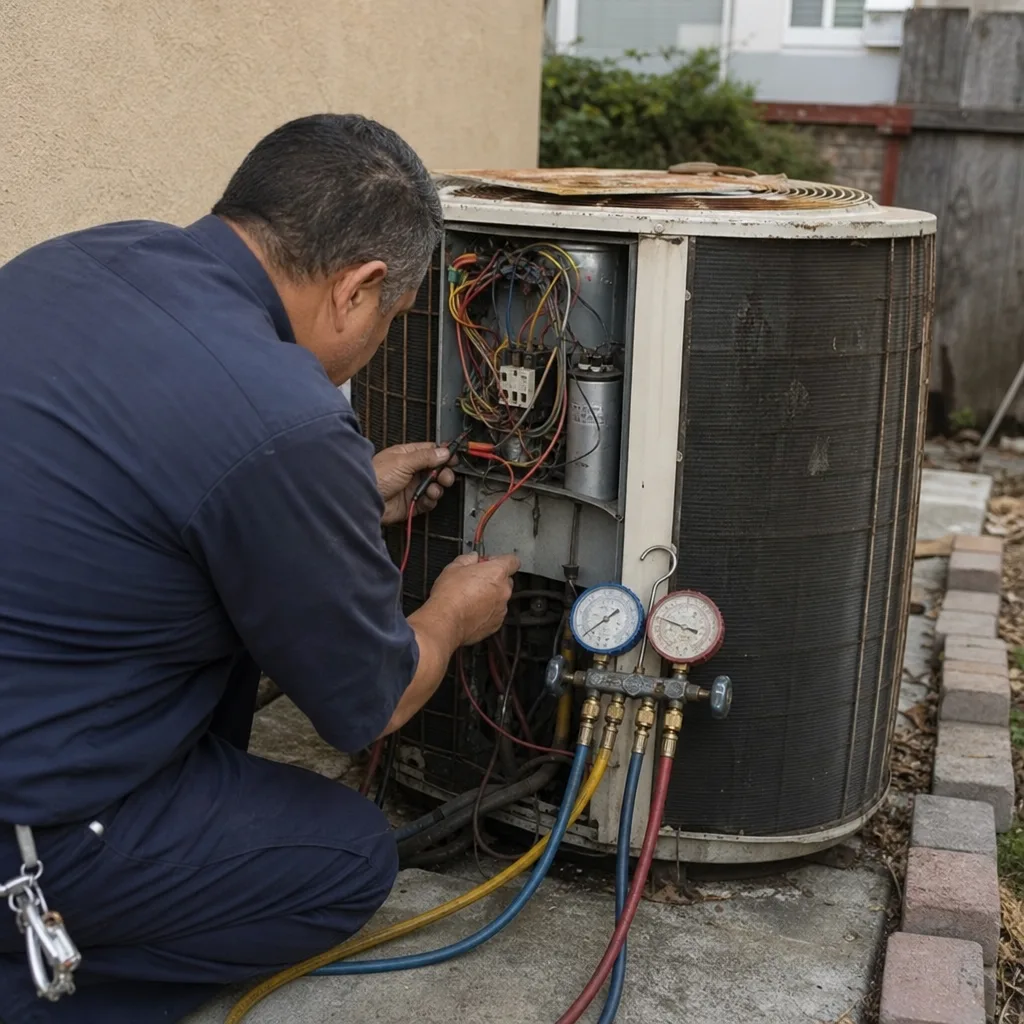 Before
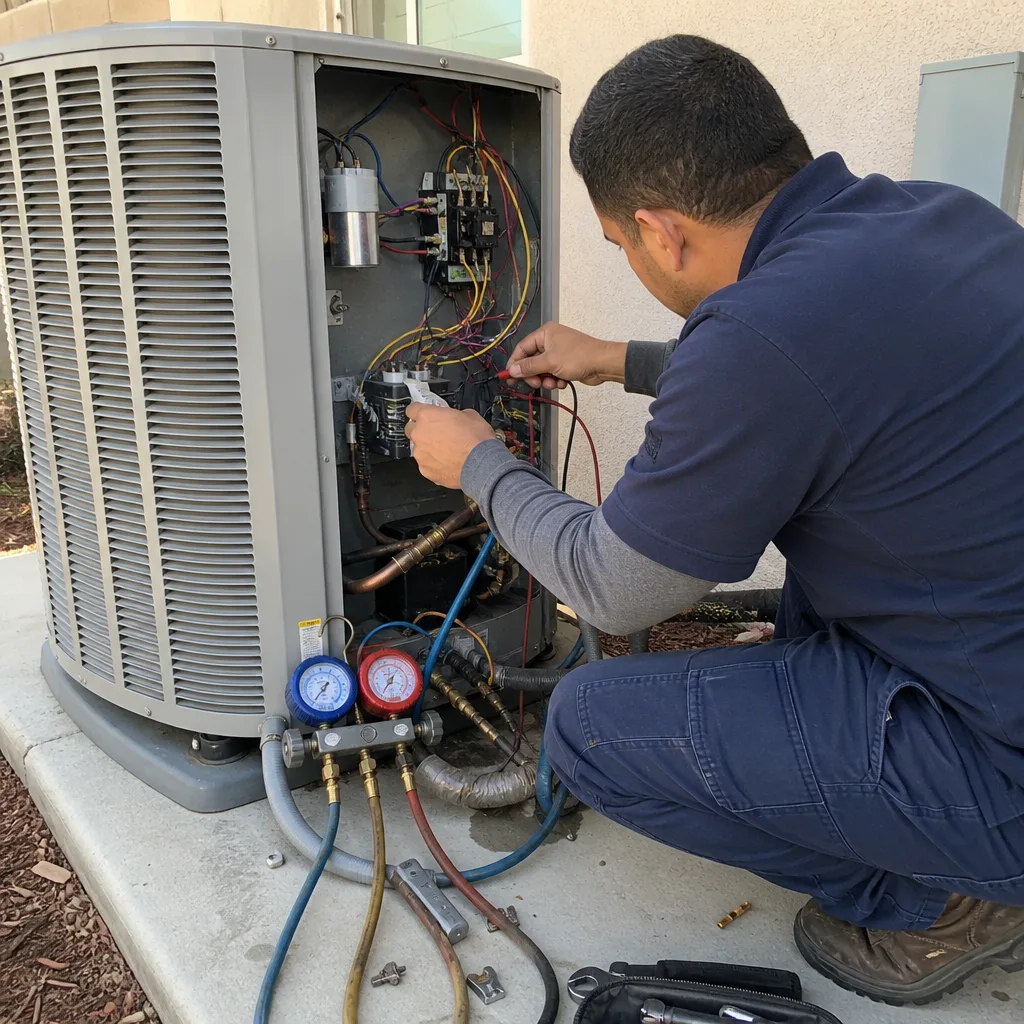 After
After Before
 After
After Before
 After
After