
Last updated October 16, 2026
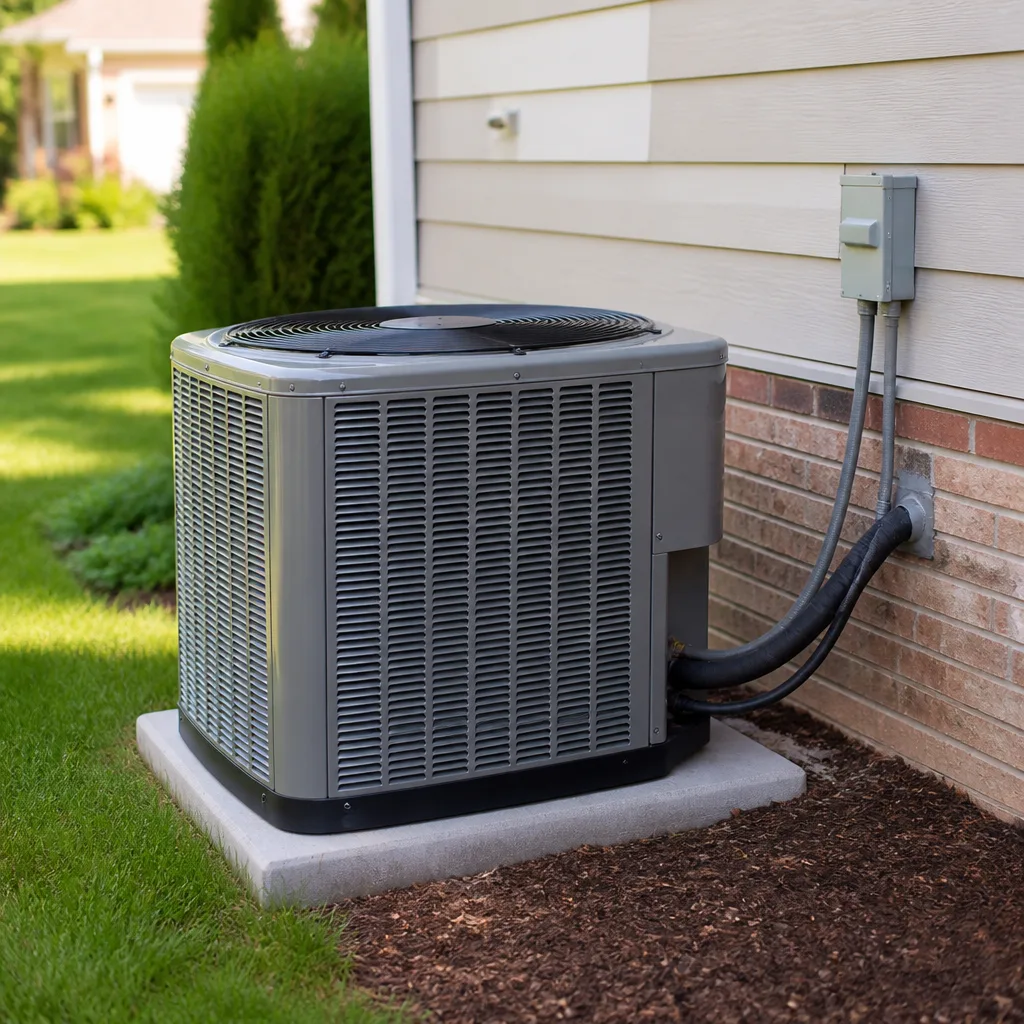 AC repair
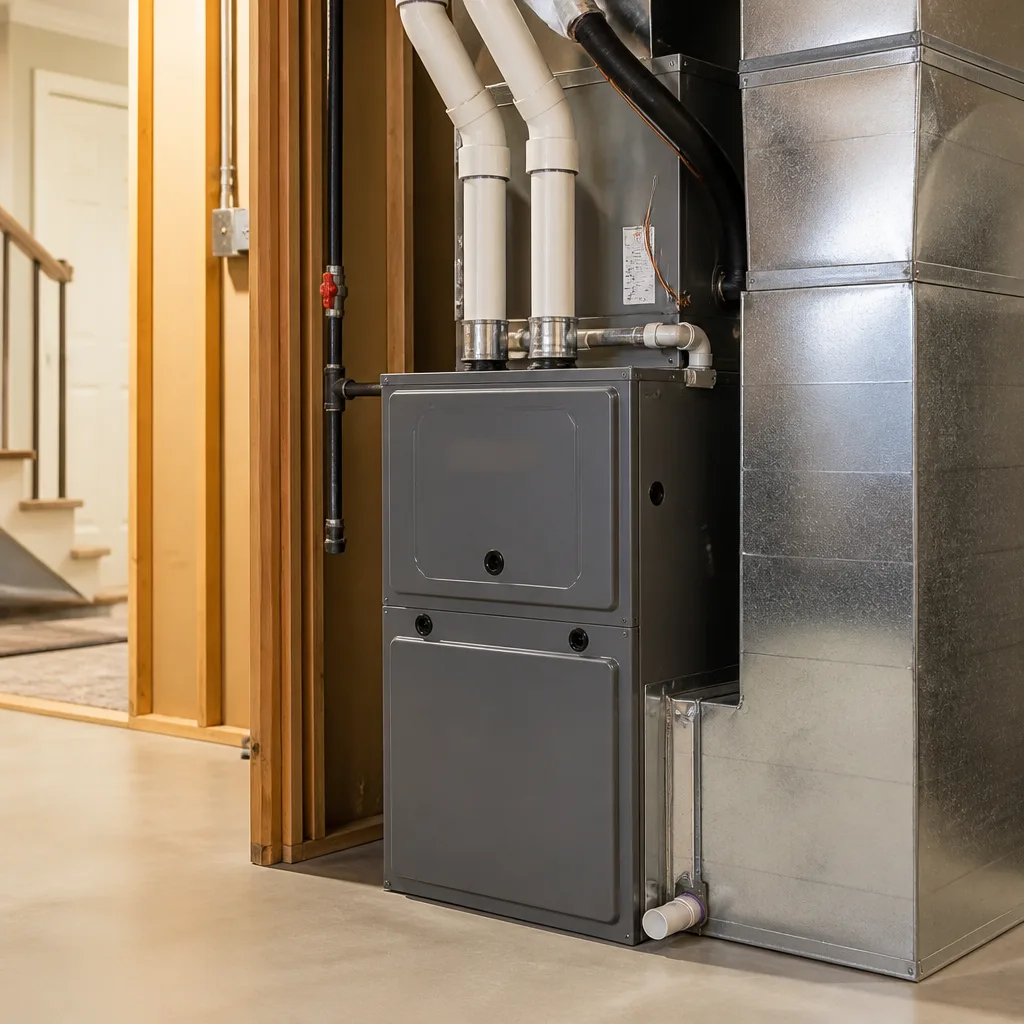 Furnace & heating
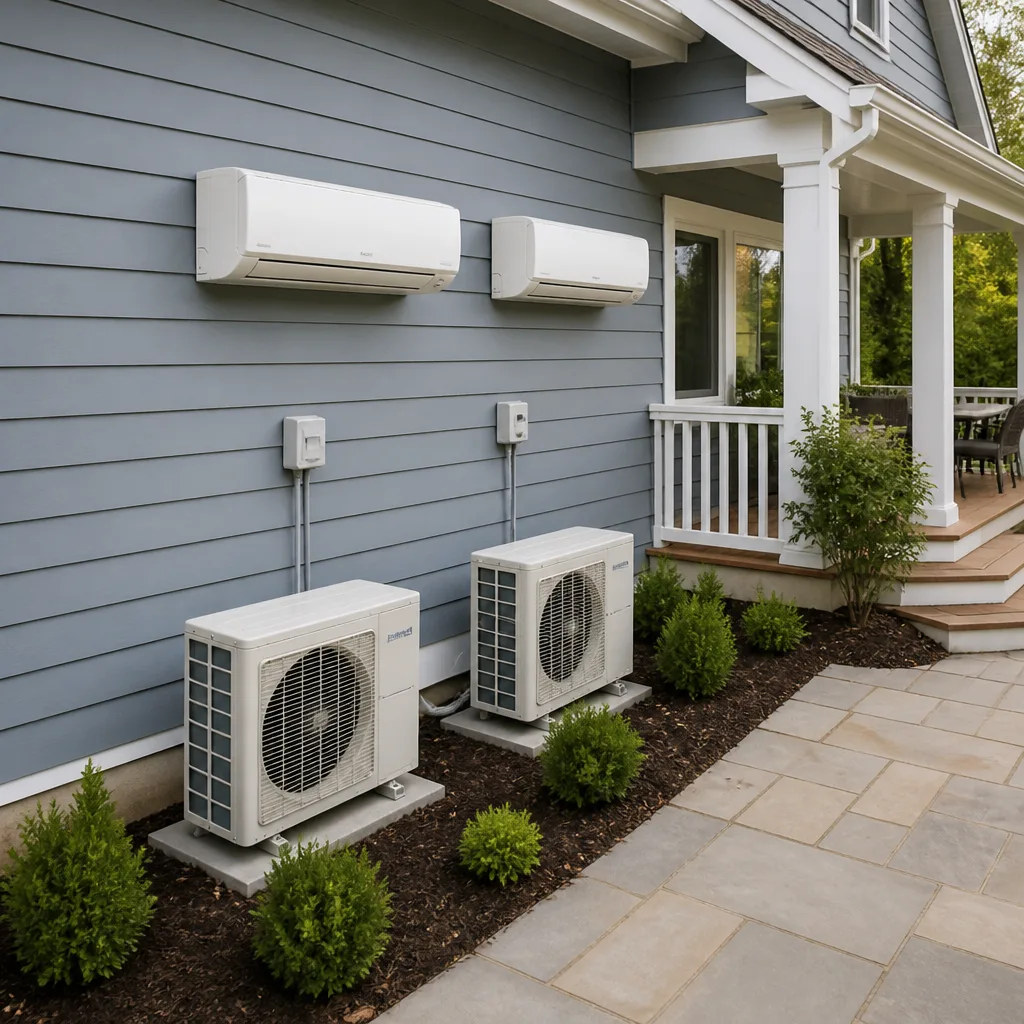 Ductless mini splits
 Carrier
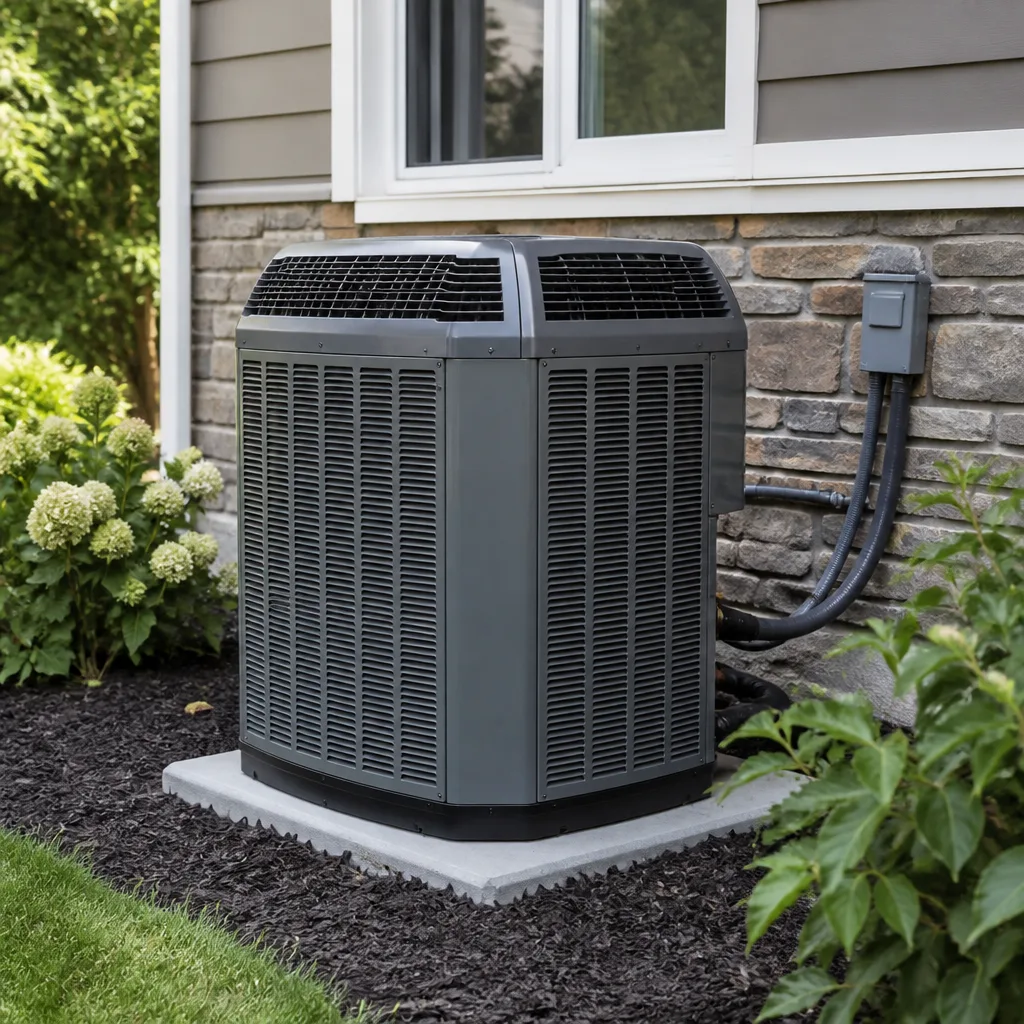 Trane
Trane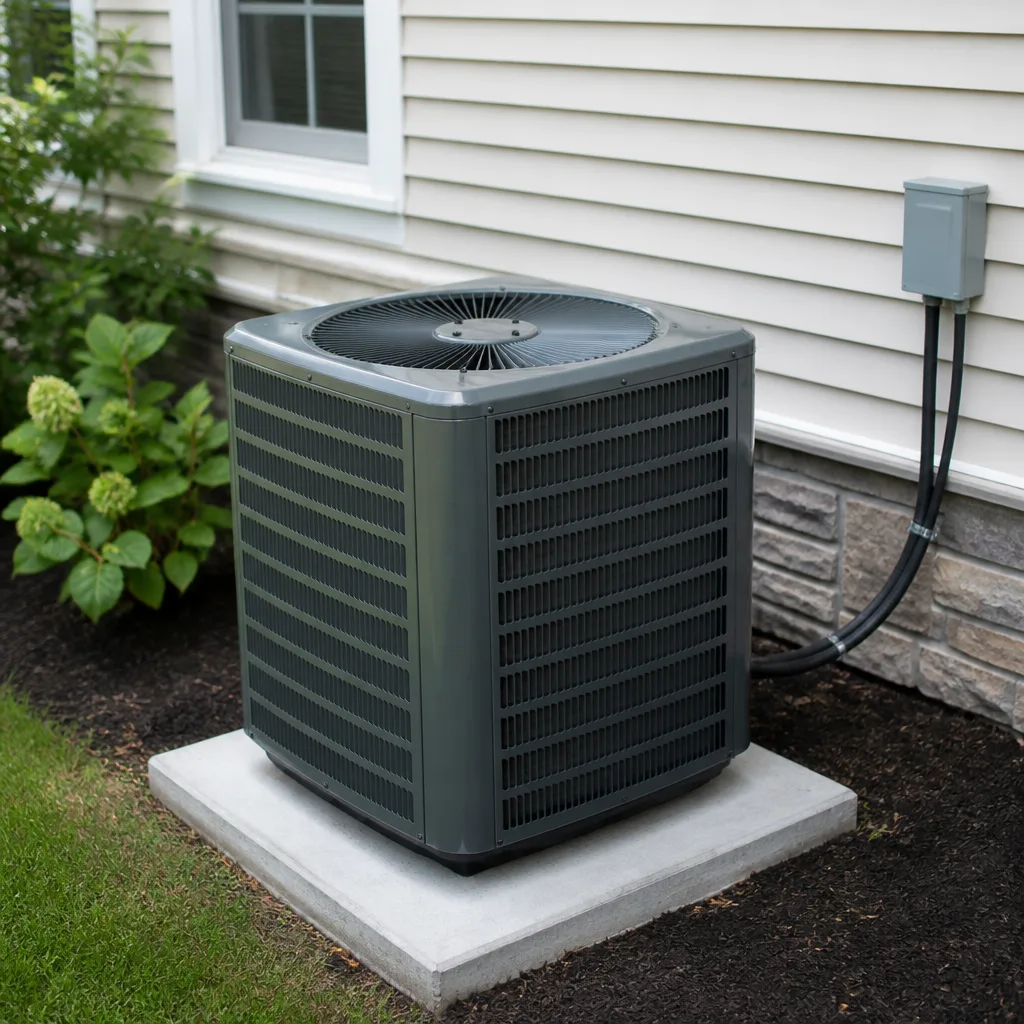 Goodman
Seasonal tune-up and full diagnostic on your Carrier, Trane, or Goodman system - readings shown to you before any repair is proposed
Diagnosis first, numbers second - you approve the repair price before a single part goes in.
Get your free estimateSeasonal HVAC Care for West Covina: Year-Round Homeowner’s Guide
West Covina homeowners who schedule AC prep in April instead of June save an average of six to eight weeks of wait time. That’s because every HVAC company in the San Gabriel Valley books solid from Memorial Day through Labor Day, and the homeowners who call first are the ones who get cool air when the first 95-degree day hits, not a spot on a two-week callback list. This guide breaks down the year according to West Covina’s actual temperature calendar, not the generic four-season advice you’ll find on national websites. For a broader overview, see The Complete Guide to HVAC in West Covina. You’ll learn exactly what to do each month, how long each task takes, and which jobs are worth hiring out.
Styles & brands we work with
Quick Answer
Seasonal HVAC care in West Covina boils down to this: schedule a professional tune-up in spring (March or April) and fall (October or November), replace your air filters every 30 to 60 days year-round, and take specific steps before Santa Ana wind events to protect your outdoor unit from dust ingestion. Most homeowners need roughly two professional visits per year plus about 15 minutes of DIY attention monthly to keep their system running through West Covina’s triple-digit heat waves and chilly winter nights. Not sure which tasks you can handle yourself? Read our DIY vs Professional HVAC: The West Covina Homeowner’s Decision Guide.
Table of Contents
- West Covina’s Actual HVAC Calendar: Two Brutal Seasons, Two Wasted Ones
- The February – March Window: The Off-Season Task That Prevents June Emergencies
- Spring HVAC Prep for West Covina: April and May
- Summer Survival: June Through September in West Covina
- Santa Ana Wind Events: HVAC Prep Most Homeowners Skip
- Fall Transition: October and November in West Covina
- Winter Heating Season: December and January
- The 12-Month West Covina HVAC Owner Task Log
- Common Mistakes to Avoid
- When to Call a Professional
- Frequently Asked Questions
- The Bottom Line
West Covina’s Actual HVAC Calendar: Two Brutal Seasons, Two Wasted Ones
West Covina doesn’t have four HVAC seasons. It has two brutal ones, summer and winter, and two shoulder seasons that most homeowners waste by doing nothing. Here’s the reality of the local climate: from June through September, daytime highs routinely sit in the 90s, with heat index values climbing past 100 on the worst days. From late November through January, overnight lows dip into the 40s, and heating systems that have sat idle since March get asked to work again. The two months most people ignore, February and October, are exactly when the smartest West Covina homeowners schedule maintenance.
Here’s the monthly demand calendar as we see it from inside the HVAC business:
- January: Furnace repair calls peak. Cold snaps expose weak igniters, bad thermostats, and clogged filters.
- February – March: The quiet window. Equipment is fresh from winter, summer is months away. Fewer than 10% of West Covina homeowners schedule anything during this stretch.
- April – May: The smart window. AC tune-up appointments are easy to get, and technicians can catch problems before the heat does.
- June – August: The panic window. Every AC company in the San Gabriel Valley is booked out a week or more. Repair prices spike, and emergency calls get triaged by severity.
- September – October: The shoulder. Temps cool off, and the relief is real. But this is the right time to service heating equipment before cold nights arrive.
- November – December: Heating panic. Contractors are still digging out of summer backlog, and furnace failures start stacking up.
Halden Heating and Air West Covina home sees this pattern repeat every single year. The homeowners who call in March get the appointment they want at the time they want. The ones who call in July get whatever’s available.
The February – March Window: The Off-Season Task That Prevents June Emergencies
Here’s the single highest-value thing any West Covina homeowner can do for their HVAC system: schedule a cooling system inspection and tune-up in February or March. The cost is the same as a mid-summer tune-up, but you’ll wait a day instead of a week, you’ll have options on appointment times, and you’ll have months of comfortable weather ahead before the system actually gets stressed.
Why February and March, Specifically?
Two reasons. First, most HVAC contractors in West Covina and the wider San Gabriel Valley run at maybe half capacity during these months. You’ll get faster service, more scheduling flexibility, and in many cases techs who aren’t rushed. Second, a March inspection catches problems that would show up as failures in June. Capacitors that test weak, refrigerant leaks that are slow now but will get worse, contactors with pitted contacts, air filters that have been ignored all winter. All of these are fixable for $150 to $500 in March. By June, some of them become emergency calls with emergency pricing.
In our experience at Halden Heating and Air West Covina, we regularly see units that test “marginal but functional” in March and then die outright by July. The heat accelerates everything. A capacitor that tests weak in March is a capacitor that fails on the hottest afternoon of the year. Fixing it early costs less than fixing it on an emergency call.
What a March Tune-Up Should Include
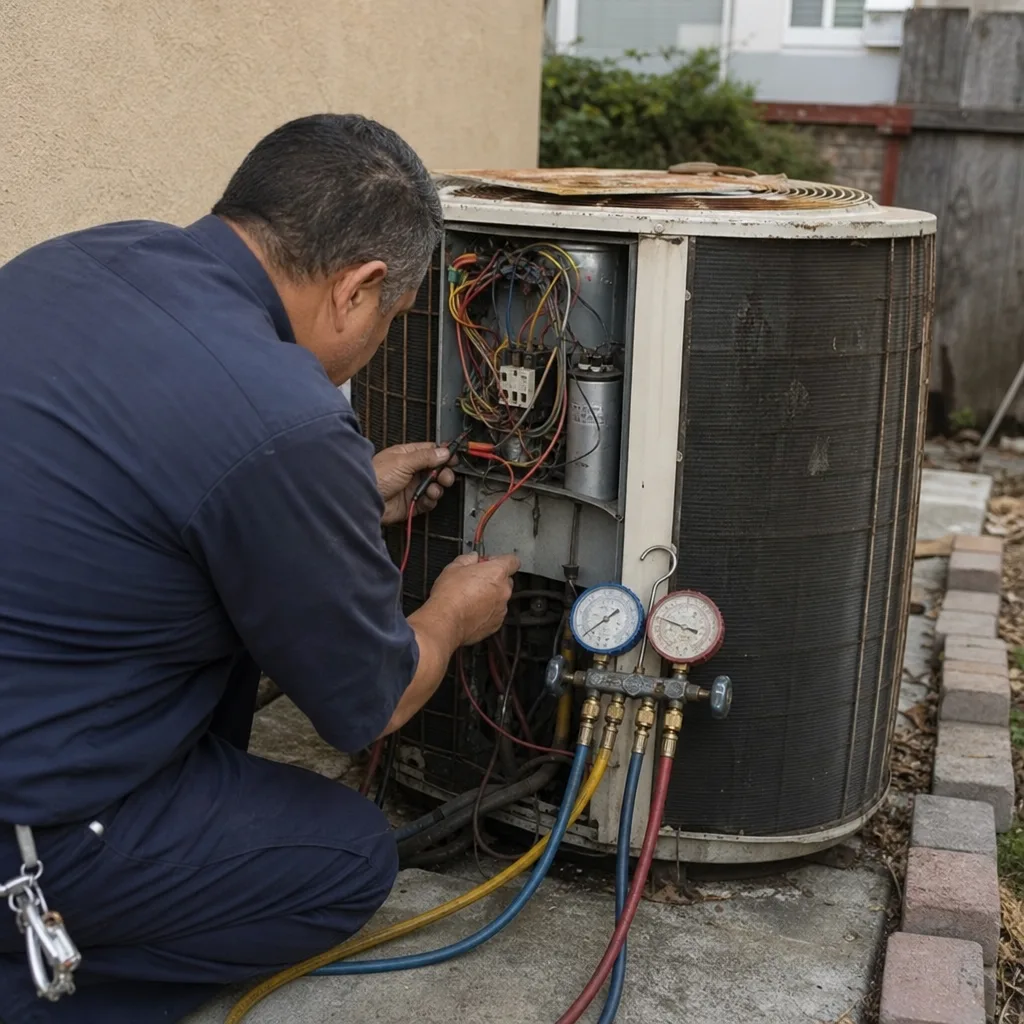
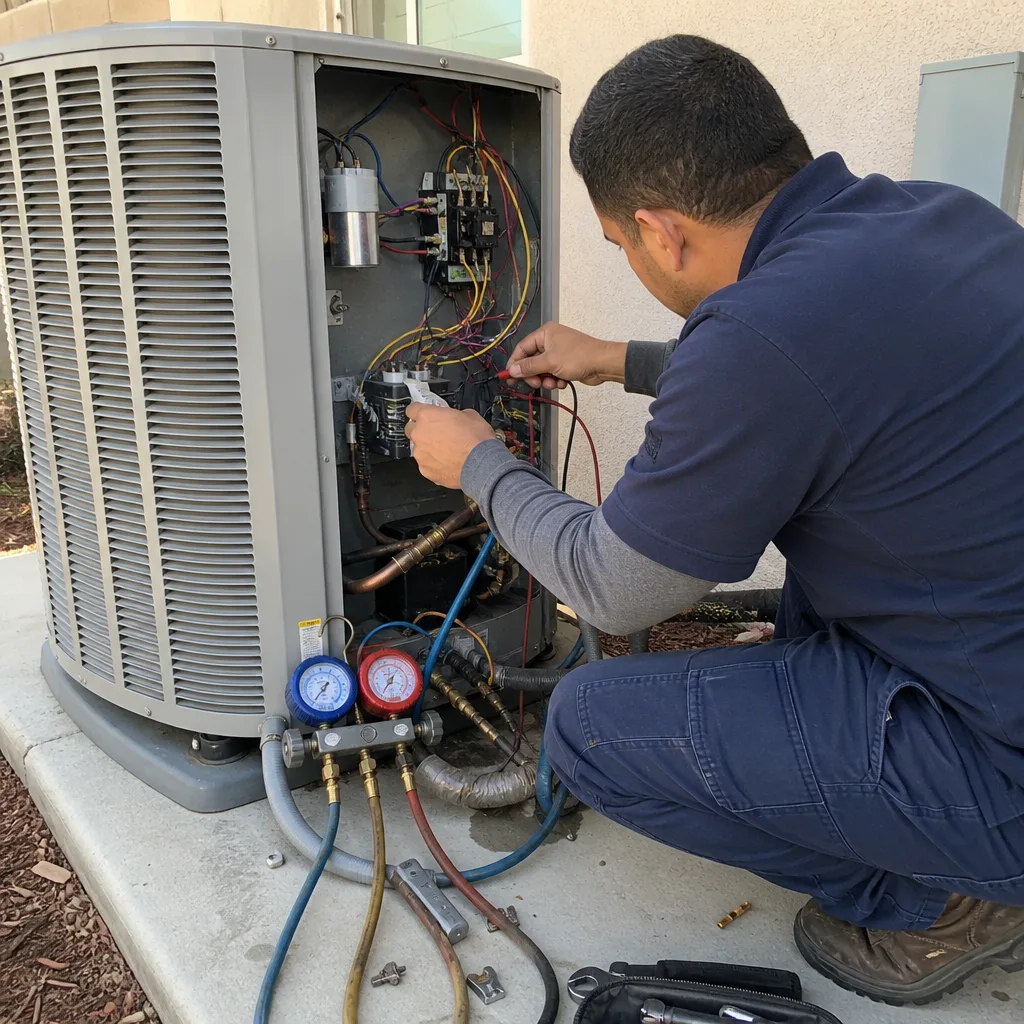
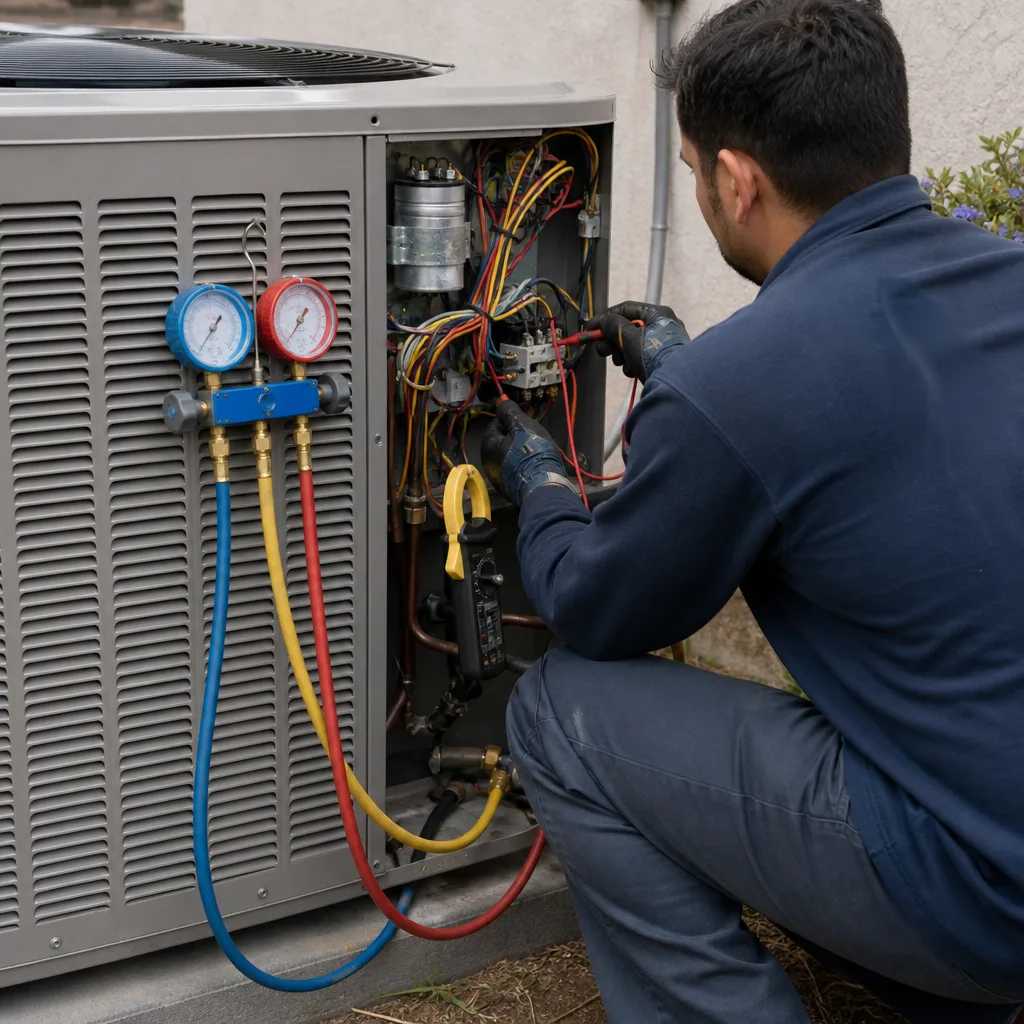
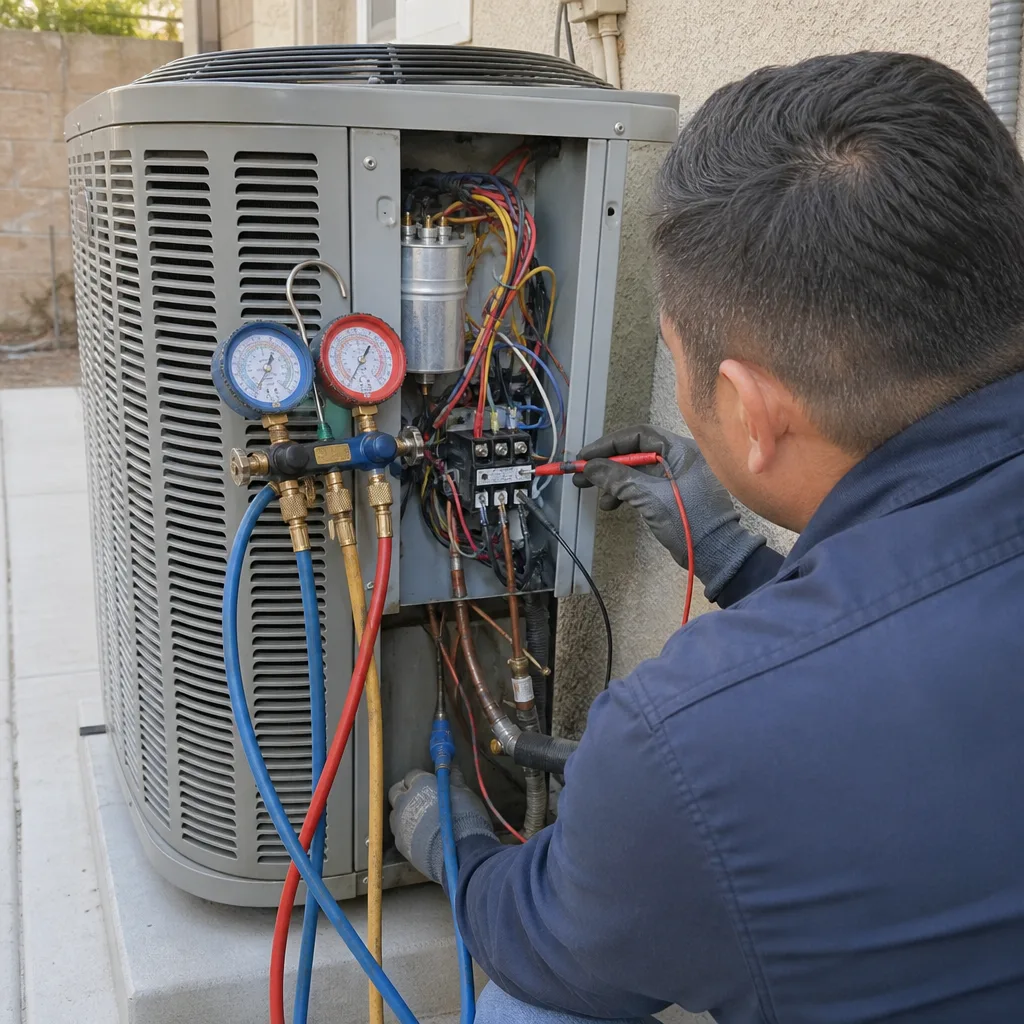
- Capacitor test: The capacitor is the electrical component that starts your compressor and fan motor. Weak capacitors are the single most common cause of AC failures we see in West Covina. A multimeter test takes 60 seconds.
- Refrigerant level check: Low refrigerant means low cooling and higher energy bills. A subcooling or superheat measurement tells the tech if the system is properly charged.
- Contact point inspection: Electrical contactors develop pitting and carbon buildup over time. Clean contacts prevent intermittent operation and compressor damage.
- Condensate drain line clearing: Clogged drain lines cause water damage and system shutdowns. This is a 10-minute task that prevents a $500 problem.
- Air filter check and replacement: If you haven’t been swapping filters monthly, this is where the tech catches you up.
- Thermostat calibration: A thermostat that reads 72 but delivers 77 is an easy fix and a common source of inefficient operation.
Book this in March, and you’ll skip the June rush entirely. Book it in February if you have the flexibility, and you’ll also get ahead of the people who book in March.
Spring HVAC Prep for West Covina: April and May
April and May are the transition months in West Covina. Daytime highs start touching the 80s, but nights stay cool. You’re not running the AC constantly yet, and you’re probably not running the heat either. This is why spring is the best time to prep your cooling system without urgency. The key questions: Is your AC ready for the first 90-degree day? And if not, can you get it fixed before everyone else realizes they need the same thing?
April: The Tune-Up Month
April is the last month in West Covina when AC tune-up appointments are easy to get. By mid-May, the calendar starts filling. If you didn’t do a March inspection, April is your second-best option. The tasks are the same as the February – March list above: capacitor test, refrigerant check, contact inspection, drain line clearing, filter replacement, and thermostat calibration. For a full breakdown, download our AC Repair Maintenance Checklist for West Covina Homeowners. If you use a company like ours, you’ll also get a written report showing exactly what was tested and what the readings were. That report matters later if you need to file a home warranty claim or show a tech what was changed.
May: The Test-Run Month
Once the tune-up is done, run your AC for a full cooling cycle on a warm afternoon. Set the thermostat 5 degrees below the current indoor temperature and let it run for 30 to 45 minutes. What you’re listening for: unusual noise (rattling, buzzing, grinding), inconsistent airflow from different vents, musty smells from the vents, and a system that runs constantly without reaching the set temperature. Any of these is a signal to call for service now, while the weather is still mild and appointment availability is still reasonable.
May is also the right time to replace your air filter if you haven’t already. A dirty filter restricts airflow, forces the system to work harder, and costs you money on every cooling cycle. In West Covina’s dusty climate, especially if you live near the 10 Freeway or in neighborhoods with lots of new construction, filters clog faster than the standard 90-day recommendation.
Summer Survival: June Through September in West Covina
West Covina summers are hot, and the worst weeks happen when a high-pressure system sits over the San Gabriel Valley and pushes temperatures into the upper 90s for days on end. This is when your HVAC system is working the hardest, and it’s also when every repair is the most expensive and the slowest to schedule. The goal for summer is not to make big changes to your system, it’s to avoid needing big changes.
June: The Heat Arrives
By mid-June, daytime highs in West Covina are routinely in the high 80s to low 90s. If you did your spring tune-up, the system should be handling this without strain. If you skipped it, the first 95-degree day is when weak capacitors fail, low refrigerant gets exposed, and overflow switches trip. It’s also when every HVAC company starts running same-day service at peak demand.
What you can do in June: change the air filter, keep the outdoor unit clear of debris, and watch your energy bill for sudden jumps. A spike in usage without a change in thermostat settings usually means something is wrong, often low refrigerant or a failing compressor.
July and August: Peak Stress Months
This is the worst time for your AC and the worst time to need a repair. Temperatures peak, and system runtime is at its highest. The number one issue we see in July and August across West Covina homes is capacitor failure, followed closely by refrigerant leaks and clogged drain lines that trip the float switch and shut the system down entirely.
If your AC does fail in peak summer, here’s the order of operations:
- Check the breaker. Sometimes the fix is as simple as resetting a tripped breaker. If it trips again, don’t reset it a third time. That’s a wiring or component problem, and it needs a pro.
- Check the filter. A severely clogged filter can cause the system to overheat and shut down on thermal overload. Replacing it costs $15 and takes two minutes.
- Check the drain line. If water is pooling near the indoor unit, the condensate drain is probably clogged, and the float switch may have cut power to the system.
- Call if the basics are fine. If the breaker is on, the filter is clean, and there’s no water, the problem is likely electrical or mechanical. That’s when you call AC Repair in West Covina.
A note on summer repair pricing: most AC repairs in West Covina run between $150 and $500 depending on the part. Capacitors are cheap. Compressors are not. A written estimate before work starts is the standard you should expect, and if a company won’t put the price in writing before touching the unit, call someone else.
Santa Ana Wind Events: HVAC Prep Most Homeowners Skip
Santa Ana winds are a fact of life in West Covina and the San Gabriel Valley. They kick up dust, dry out the air, and push fine particulate matter into every crevice of your home, including your HVAC system. Most homeowners do nothing to prepare, which is why we see a predictable spike in airflow problems and coil fouling after every major Santa Ana event.
What Santa Ana Winds Do to Your HVAC
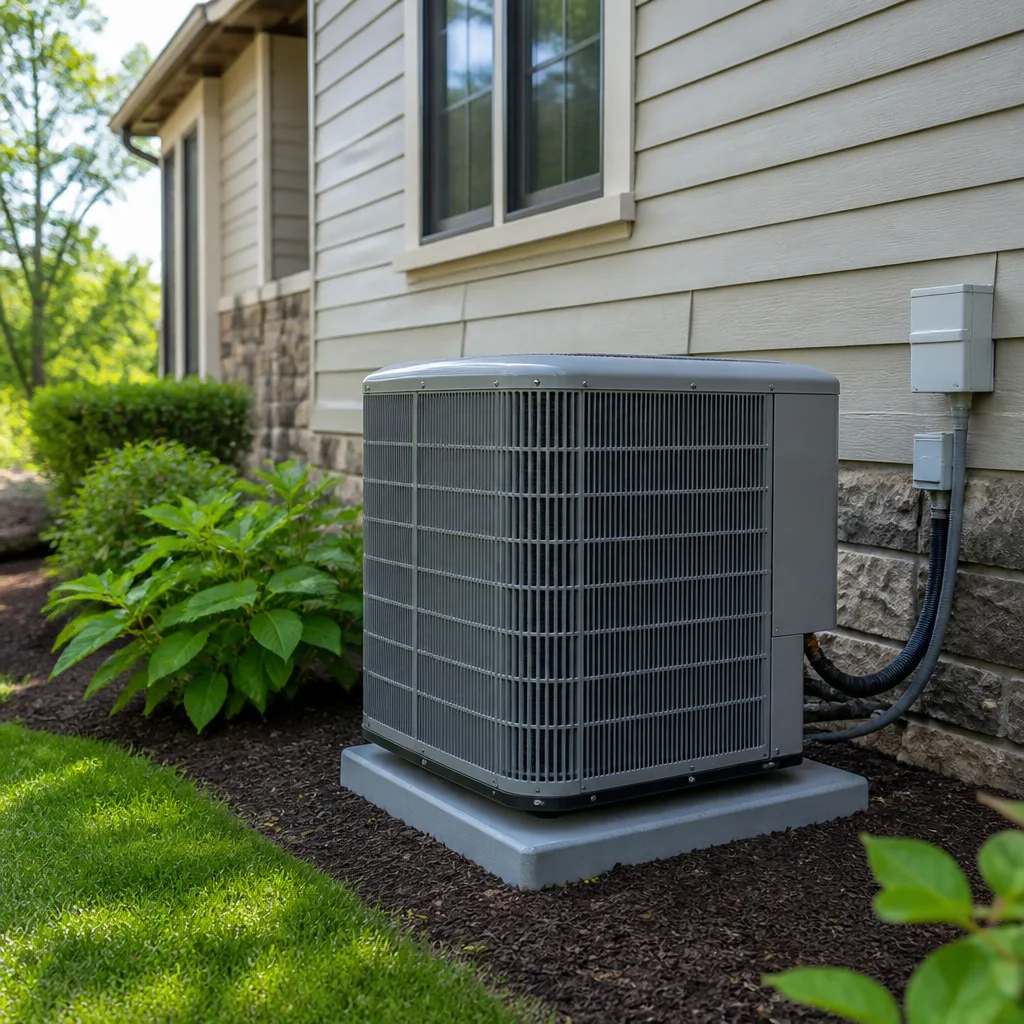
The outdoor condenser unit pulls air through its coil fins to release heat. When that air is full of dust, leaves, and debris, the coil gets coated. A dirty coil can’t release heat efficiently, which means the compressor works harder, runs hotter, and draws more electricity. Over time, this shortens compressor life and drives up energy bills. The indoor side has a similar problem: dust gets pulled through the return air vents and coats the evaporator coil and blower wheel.
Prep Steps Before a Santa Ana Event
- Clear the area around the outdoor unit. Trim back any vegetation within 2 feet of the condenser. Remove leaves, grass clippings, and any loose debris that could get sucked into the coil.
- Replace the air filter. A clean filter catches more dust, which means less of it reaches the indoor coil. This is the cheapest and most effective prep step.
- Check that the unit is level. High winds can’t knock a unit over if it’s properly installed, but a severely tilted unit can strain the fan motor bearings. If it’s visibly tilted, that’s a service call issue.
- Secure any loose panels. Rattling during wind events is usually just a loose access panel, but the vibration can stress electrical connections over time.
After the Wind Event
Once the winds die down, inspect the outdoor unit. If the coil is visibly coated in dust and debris, hose it down gently with a garden sprayer (never a pressure washer, which can bend the aluminum fins). If the airflow from your vents feels weaker after a Santa Ana event, the indoor coil or filter may be loaded with dust, and a full system cleaning may be in order. This is a common service call in West Covina in the weeks after major wind events, and it’s a legitimate one, a dirty coil reduces cooling capacity by 10 to 15% in some cases.
Fall Transition: October and November in West Covina
October is the second most-wasted month for HVAC maintenance in West Covina. The first is February. Here’s the problem: heating season arrives in November, but contractors are still digging out of summer backlog, and the earliest appointments are two to three weeks out. The homeowners who schedule furnace service in October get their system inspected while it’s still mild outside. The ones who wait until the first cold snap are competing for emergency slots.
October: The Furnace Tune-Up Month
Your furnace has been sitting idle since March or April. Six months of dust, pet hair, and general disuse is plenty of time for something to go wrong. The October tune-up should include:
- Burner and ignition system inspection – to confirm the furnace lights reliably on the first attempt
- Heat exchanger inspection – the heat exchanger is the metal chamber that separates combustion gases from the air in your home. Cracks are a serious carbon monoxide risk.
- Flue and venting check – blockages in the flue pipe are also a carbon monoxide risk and need to be cleared before the furnace runs regularly
- Blower motor and belt inspection – the blower pushes warm air through your ducts, and a worn belt or failing motor means weak heat
- Filter replacement – same as cooling season, a clean filter matters for airflow
- Thermostat test in heating mode – confirm the system switches between heating and cooling correctly
If you have a gas furnace, this is also the time to test your carbon monoxide detectors. The heat exchanger inspection is the most important part of the whole service, because a cracked exchanger can put carbon monoxide in your home without you ever knowing it. This is one of those areas where hiring a trained professional is non-negotiable, the inspection requires specialized knowledge and the risk of getting it wrong is a health hazard. In our experience, homeowners who mention the words “carbon monoxide” during a tune-up get the inspection done right, because the tech knows the customer is paying attention.
November: The First Heating Weeks
When the first cold snap hits West Covina, usually sometime in late November, heating calls spike. That’s when Furnace Repair in West Covina becomes the most common service call in our area. The typical failing points: ignitor failure (the component that lights the gas), flame sensor failure (the component that tells the system the burner is lit), and thermostat issues (dirty contacts, dead batteries, or incorrect settings).
Most furnace repairs run between $150 and $450, with ignitors and flame sensors on the cheaper end and blower motors and control boards on the higher end. Written estimates before work starts should be standard, and if the company arrives and starts adding line items without approval, that’s a red flag.
Winter Heating Season: December and January
West Covina winters are mild by most standards, but overnight temperatures in the 40s mean the furnace runs on most nights from late November through January. The heating season is shorter and less intense than the cooling season, which is good news for your system. But it’s also why many homeowners in West Covina go years without meaningful furnace maintenance, and the first cold snap exposes years of accumulated neglect all at once.
December: The Coldest Weeks
December is a steady month for furnace demand. The system gets used every night, and that regular use is actually good for it, it keeps the blower motor lubricated, burns off accumulated dust on the burner, and keeps electrical connections from corroding. The problems that surface in December are usually small: a thermostat that’s off by a few degrees, a filter that’s been in since summer, a drafty room that forces the furnace to run longer than needed.
One thing specific to West Covina in December: cold, clear nights are common. On those nights, the furnace cycles more frequently and works harder to maintain temperature. If your system is struggling, check the filter first, then look at the thermostat. If both are fine, call for service, but December is the last low-wait month before January’s peak.
January: The Peak Repair Month
January is when furnace failures peak in West Covina. The reason is simple: the system has been running nightly for six to eight weeks, and any marginal components finally fail. Ignitors crack, flame sensors carbon up, blower motors give out. Not coincidentally, January is also when we see the highest call volume for heating service all year. The fix is the same advice as summer: if the heat goes out in January, check the basics (breaker, filter, thermostat batteries) and then call. A furnace that runs but doesn’t heat is usually a flame sensor or ignitor issue. A furnace that doesn’t run at all is usually electrical, a control board, a blower motor, or a safety switch that’s tripped. Either way, it’s a professional fix.
Carbon monoxide safety deserves a mention here. Gas furnaces produce CO as a byproduct of combustion, and the system is designed to vent it outside. But if the heat exchanger cracks, CO can enter your home instead. Symptoms of exposure include headaches, dizziness, and nausea that improve when you leave the house. If you have any suspicion of a CO leak, leave the house immediately and call for service. This is not a DIY diagnosis situation.
The 12-Month West Covina HVAC Owner Task Log
Here’s the complete year in task-list form, with time estimates so you can plan around it. Print this, save it in your phone notes, or stick it on the side of the air handler. You can also find more guides & resources on our blog. The total DIY time commitment is roughly 3 hours per year. The professional commitment is two tune-ups, one in spring and one in fall.
January
- Replace the air filter (5 minutes)
- Test the furnace by running a full heating cycle and confirming the home reaches the set temperature (10 minutes)
- Check that no vents are blocked by furniture or rugs (5 minutes)
February
- Book the spring AC tune-up (10 minutes on the phone or online)
- Replace the air filter (5 minutes)
- Inspect the outdoor unit for debris from winter storms (5 minutes)
March
- Complete the AC tune-up (professional visit, 60 – 90 minutes)
- Replace the air filter (5 minutes)
- Test the AC in cooling mode on a warm afternoon (15 minutes)
April
- Trim vegetation around the outdoor unit (15 minutes)
- Replace the air filter (5 minutes)
- Confirm the drain line is clear by checking for standing water near the indoor unit (5 minutes)
May
- Replace the air filter (5 minutes)
- Run the AC for 30 minutes and listen for unusual noises (30 minutes)
- Check the thermostat programming for summer (10 minutes)
June
- Replace the air filter (5 minutes)
- Clear debris from around the outdoor unit after any wind events (10 minutes)
- Monitor the energy bill for unexpected usage spikes (5 minutes)
July
- Replace the air filter (5 minutes)
- Check the outdoor unit coil for visible dirt buildup; hose down gently if needed (15 minutes)
- Confirm the condensate drain is flowing by checking for water at the drain exit during operation (5 minutes)
August
- Replace the air filter (5 minutes)
- Do a visual inspection of the outdoor unit for signs of oil leaks or unusual wear (5 minutes)
- If the system has been running constantly, consider a mid-season coil cleaning (professional visit, 45 minutes)
September
- Book the fall furnace tune-up (10 minutes)
- Replace the air filter (5 minutes)
- Clean the return air grilles with a vacuum attachment (10 minutes)
October
- Complete the furnace tune-up (professional visit, 60 – 90 minutes)
- Test the carbon monoxide detectors (5 minutes)
- Replace the air filter (5 minutes)
November
- Replace the air filter (5 minutes)
- Run the furnace for a full cycle and confirm every room reaches temperature (20 minutes)
- Note any rooms that feel colder than others for future duct balancing discussion (5 minutes)
December
- Replace the air filter (5 minutes)
- Check the outdoor unit for winter debris and keep it clear (10 minutes)
- Confirm the thermostat switches correctly between heating and cooling modes (5 minutes)
The total: about 3 hours of DIY time and two professional visits per year. That’s less time than the average emergency repair call takes when the AC goes out in August.
Common Mistakes to Avoid
- Ignoring the air filter for months at a time. In West Covina’s dusty climate, especially during Santa Ana season, filters clog in 30 to 60 days. A clogged filter restricts airflow, forces the system to work harder, and shortens the life of the blower motor.
- Waiting until June to schedule AC service. By mid-June, every HVAC company in West Covina is booked out. The March or April tune-up costs the same and comes with scheduling flexibility you’ll never get in summer.
- Neglecting the furnace because “winters are mild.” West Covina winters are mild compared to the Midwest, but your furnace still runs every night from November through January. Years of skipped maintenance show up all at once when the first cold snap hits.
- Ignoring Santa Ana wind prep. Dust ingestion during wind events coats coils and filters, reduces efficiency, and causes airflow problems. The prep takes 10 minutes and can prevent a service call later.
- Running the AC with a known refrigerant leak. Low refrigerant doesn’t just mean weak cooling, it means the compressor runs hot and works harder. Small leaks become big leaks, and big leaks become compressor failures, which are the most expensive repair on the unit.
- Accepting vague pricing or verbal-only estimates. Every repair should come with a written price before work starts. If the tech won’t commit a number to paper before touching the unit, you’re taking on risk you don’t need.
- Skipping the fall furnace tune-up because the furnace “worked fine all winter.” The best time to confirm it’ll work next winter is before the first cold night, not after. October furnace service is fast, cheap, and stress-free. A January emergency call is none of those.
When to Call a Professional
Some HVAC work belongs in the hands of a trained tech. The list includes anything involving refrigerant, gas lines, heat exchangers, compressor internals, or high-voltage electrical. Refrigerant is regulated for a reason. Gas work carries obvious safety risks. Heat exchanger inspection requires specialized tools and knowledge because a missed crack is a carbon monoxide hazard. And high-voltage electrical work, including capacitors, contactors, and control boards, can cause serious injury or equipment damage if done incorrectly.
If your system is making unusual noises, running constantly without reaching temperature, tripping breakers, leaking water, or if you smell gas or suspect a carbon monoxide issue, call a professional. Halden Heating and Air West Covina offers free estimates in West Covina, call (831) 607-5485. Every call gets a live person, a real appointment time, and a written price before any work starts.
Frequently Asked Questions
Professional tune-ups in West Covina typically run between $80 and $150 per visit for a standard inspection and cleaning, with written reports included. Some companies offer maintenance agreements that bundle spring and fall visits at a discount. Repairs found during maintenance are priced separately, and most run from $150 to $500 depending on the part. Call (831) 607-5485 for exact pricing for your system.
The ideal window is February through April, before the summer rush begins. By the time June arrives, every HVAC company in the San Gabriel Valley is booked out one to two weeks or more. February and March appointments are easy to get, and the work catches problems before the first 90-degree day stresses the system.
Every 30 to 60 days, depending on your home. Homes with pets, homes near new construction, homes in high-dust neighborhoods near the 10 Freeway, and homes with residents who have allergies should lean toward 30 days. The standard 90-day recommendation assumes a clean, low-dust environment that most West Covina homes don’t have.
Yes. Santa Ana winds carry dust and fine debris that coat condenser coils and clog filters. Before a wind event, clear the area around the outdoor unit and replace the filter. After the event, visually inspect the coil and hose it down if it’s visibly dirty. Weak airflow from vents after a Santa Ana event often means the indoor coil or filter is loaded with dust.
Some of it, yes. Air filter replacement, clearing debris around the outdoor unit, checking for water leaks, and testing the thermostat are all safe DIY tasks. Anything involving refrigerant, gas lines, electrical components, or the heat exchanger should be left to a trained professional. Those systems are genuinely dangerous to work on without the right training and tools.
The rough rule: if the repair cost times the system’s age in years exceeds $5,000, replacement is worth considering. A 15-year-old system with a $500 repair is often better replaced, because more failures are coming. A 5-year-old system with a $500 repair is almost always better repaired. A detailed load calculation and written estimate make the decision easier, and any reputable company will walk you through both options without pressure. For help deciding, compare the numbers with AC Installation in West Covina.
The Bottom Line
West Covina’s HVAC calendar rewards the homeowners who act in the off-seasons and penalizes the ones who wait for the weather to force their hand. A March AC tune-up and an October furnace tune-up, plus monthly filter changes and basic awareness during Santa Ana season, is enough to get most systems through the year with fewer breakdowns and lower energy bills. The total time commitment is about three hours of DIY work and two professional visits. The alternative, six to eight weeks of wait time in peak season and emergency pricing on repairs, is a self-inflicted cost no one needs. Schedule the off-season service, keep the filters fresh, and call Halden Heating and Air West Covina home at (831) 607-5485 when you’re ready to set it up. We’ll give you a written price before any work starts, a live arrival time when we come out, and a 365-Day Done Right Promise so the work stays done. That’s the standard, and it’s not an upgrade.
Written by Andre Fuller, Owner at Halden Heating and Air West Covina, serving West Covina since 2004.
See the difference
 Before
 After
After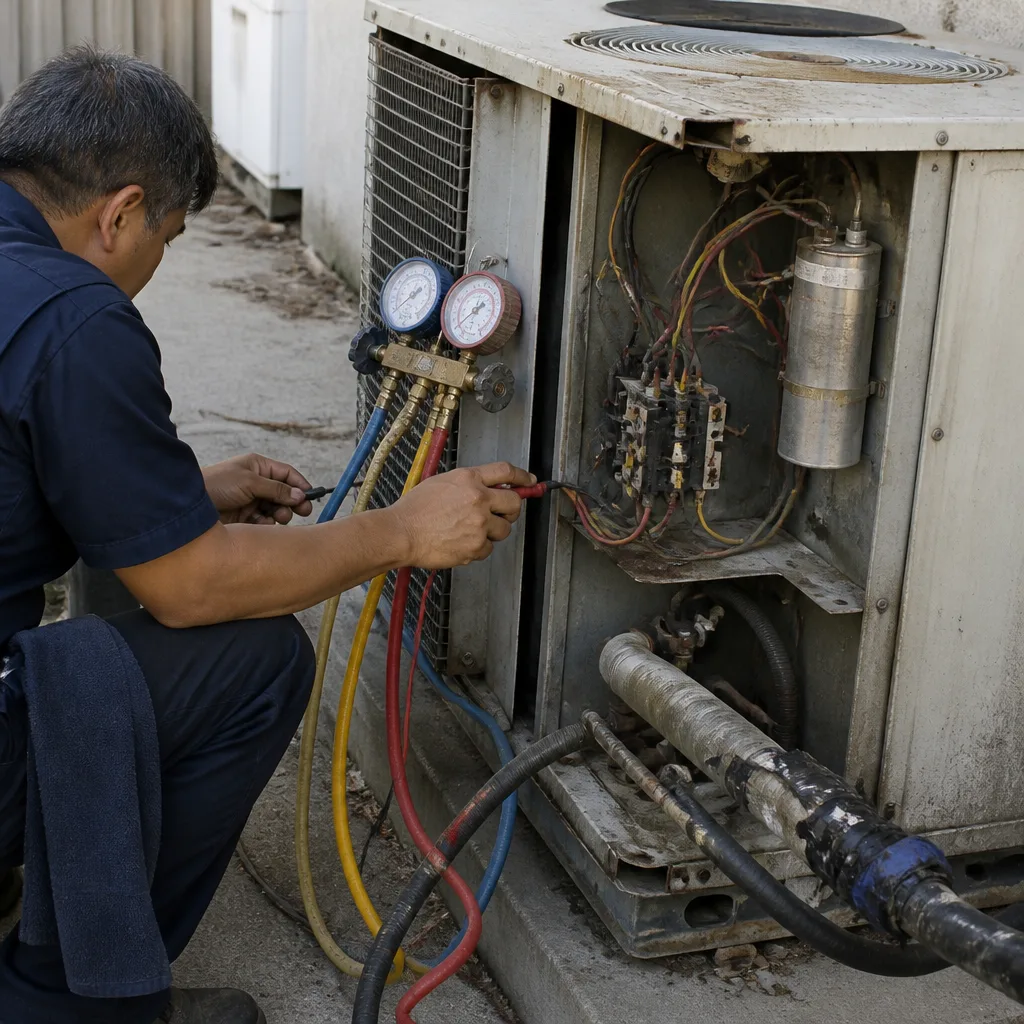 Before
 After
After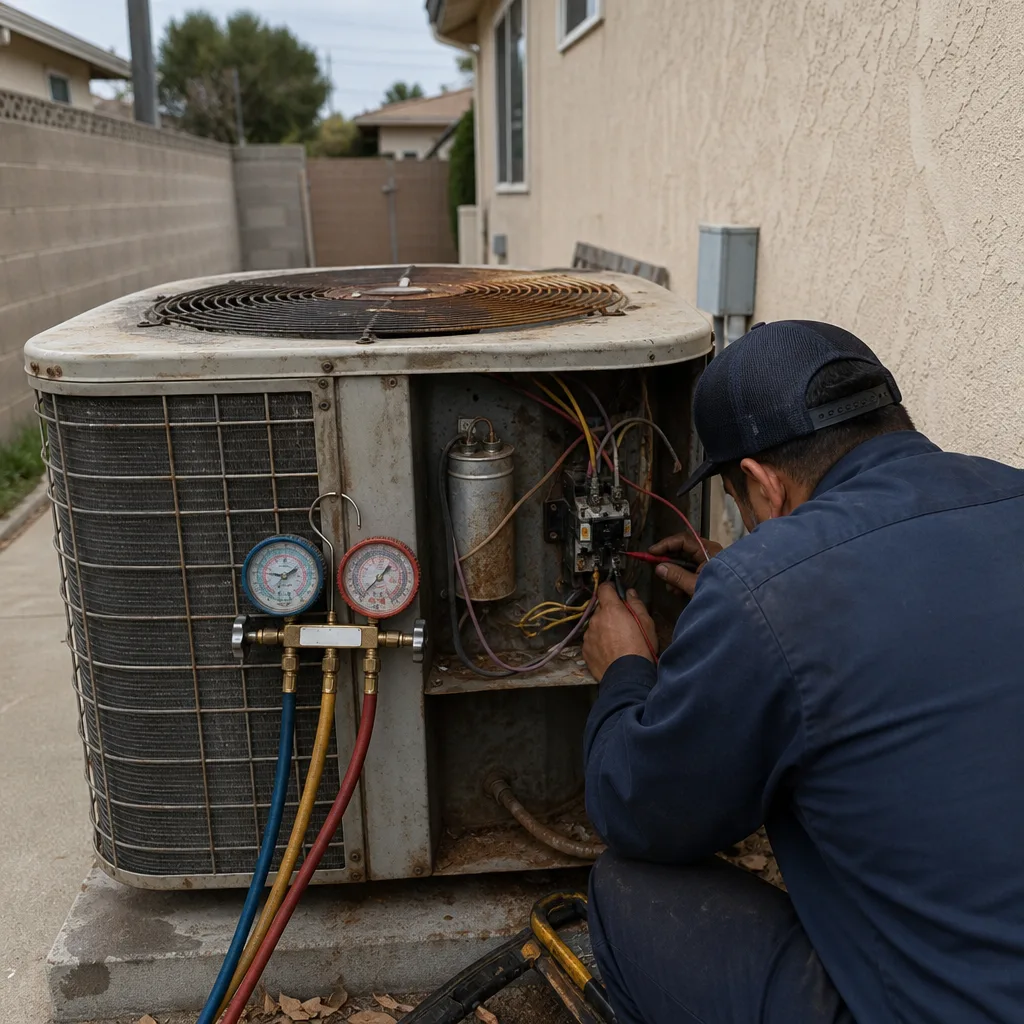 Before
 After
After