
 Furnace & heating
 AC repair
 Ductless mini splits
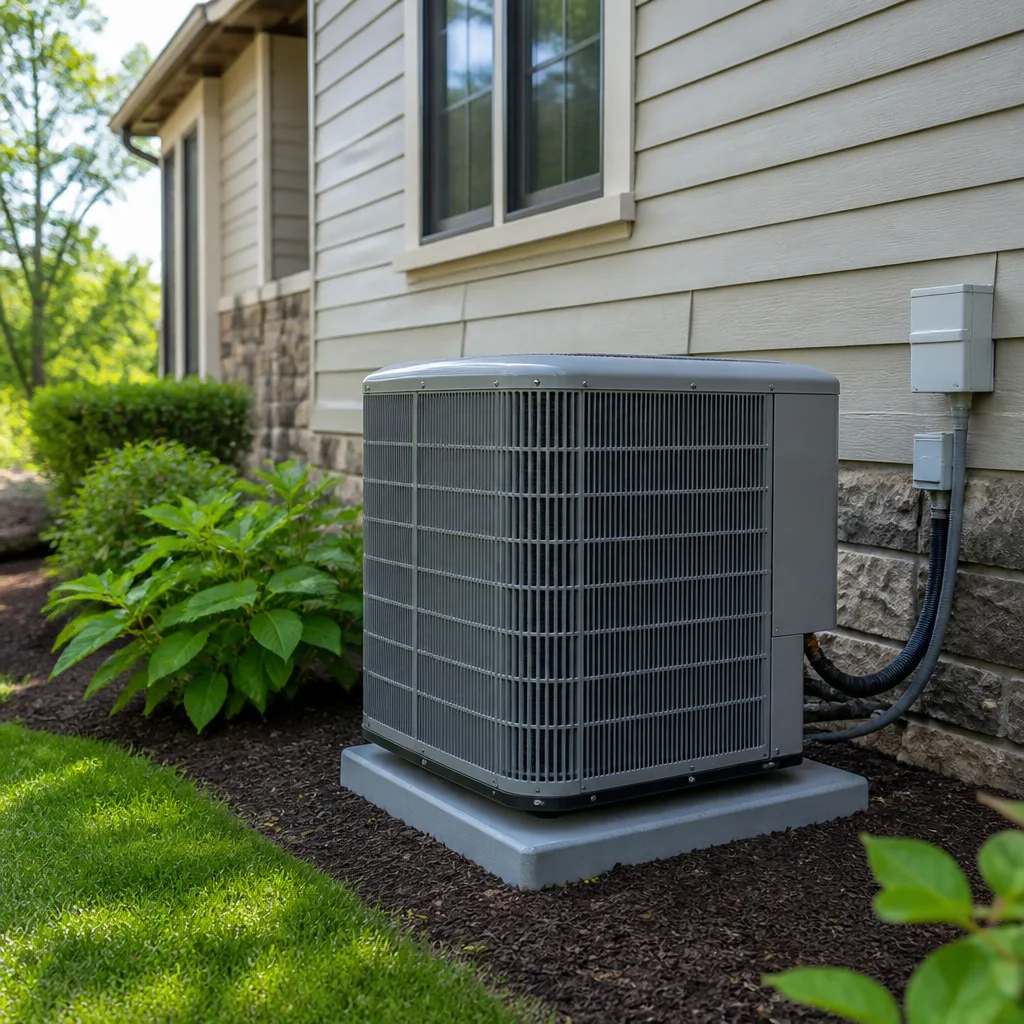 Carrier
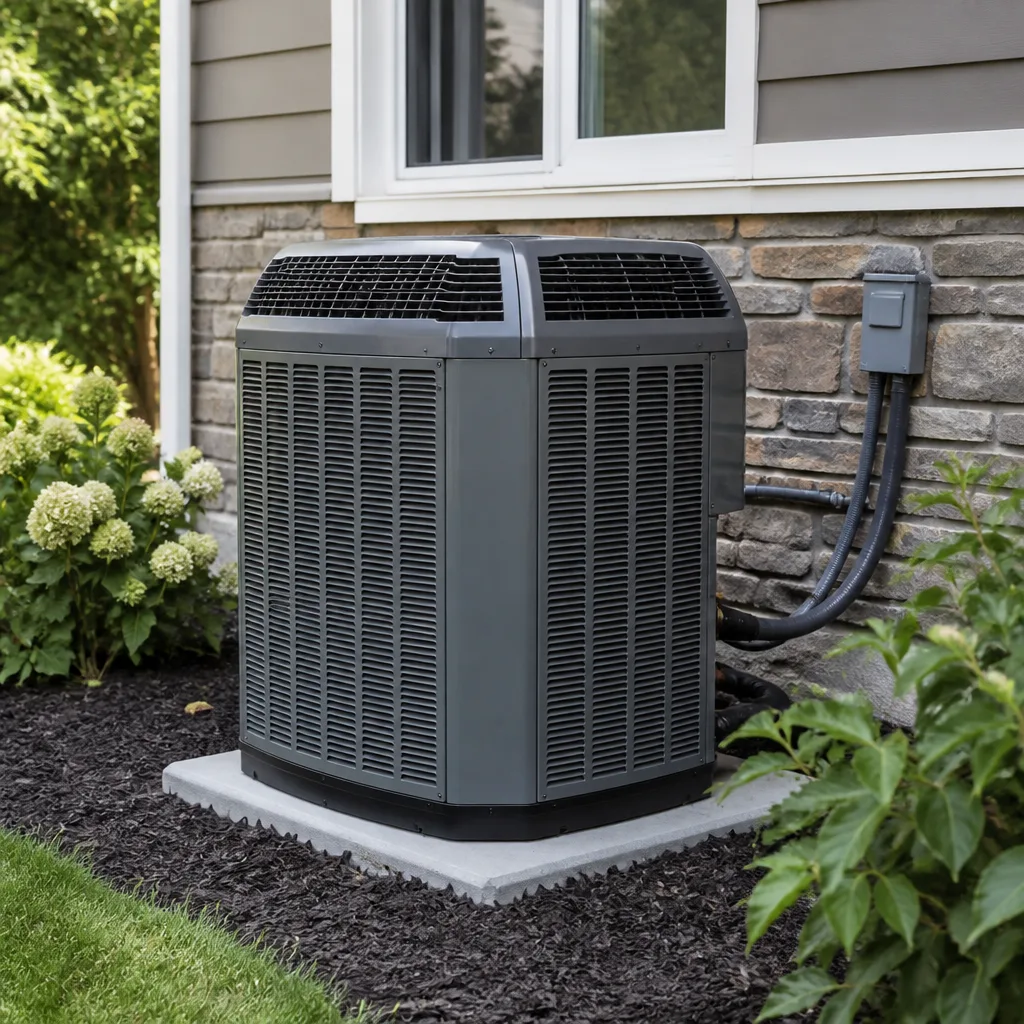 Trane
Trane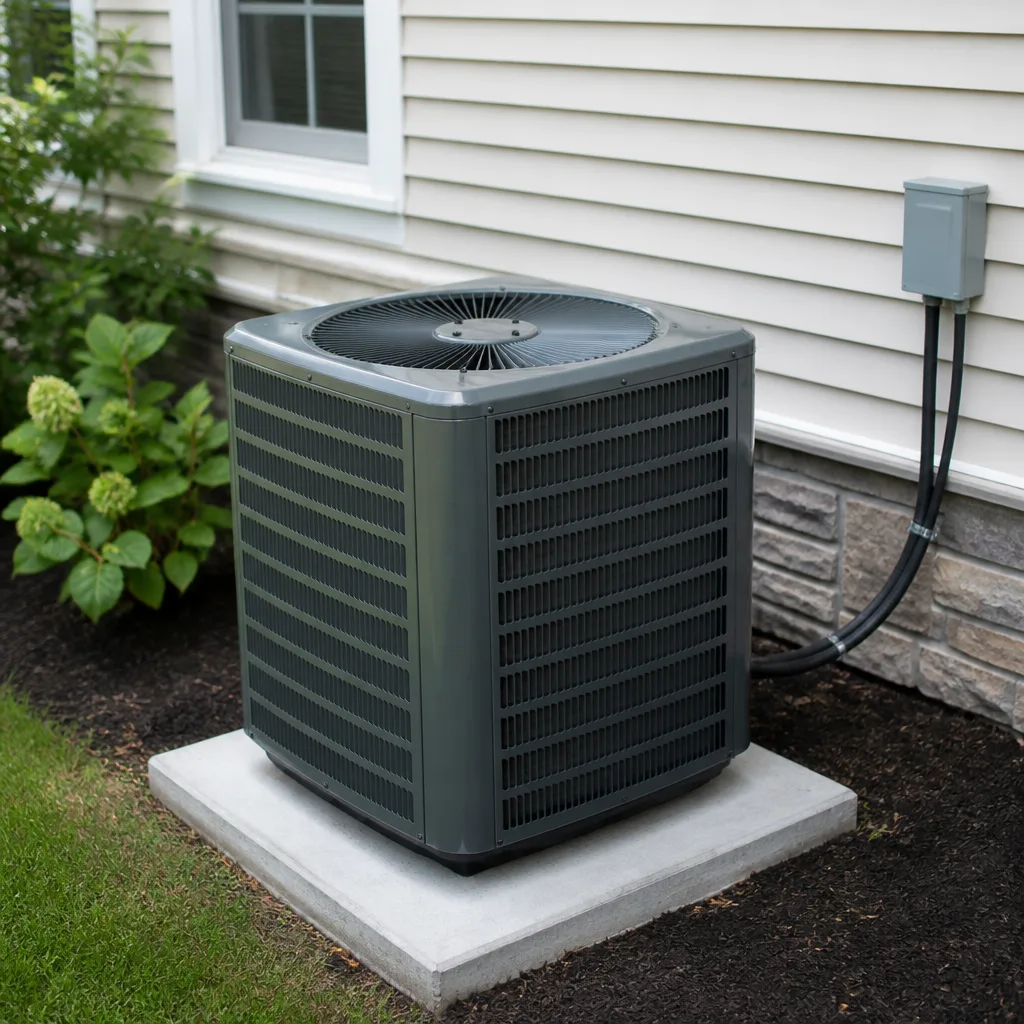 Goodman
Seasonal tune-up and full diagnostic on your Carrier, Trane, or Goodman system - readings shown to you before any repair is proposed
Diagnosis first, numbers second - you approve the repair price before a single part goes in.
Get your free estimateFast, Reliable AC Installation Across San Dimas
A new AC installation in San Dimas typically runs between $3,500 and $7,500 depending on system size, efficiency rating, and whether your home needs ductwork repairs first. Most full replacements take one to two days once the equipment arrives, and we always hand you a written price before any work starts. If you’re trying to survive another summer in a 1970s house with original ductwork, call (831) 607-5485 and we’ll walk you through what your home actually needs. Not what a sales script says it needs.
San Dimas is a city where the construction era matters as much as the temperature outside. The homes here tell a specific story: slab-on-grade foundations, ranch and split-level layouts, and ductwork that has spent four or five decades under shifting dry soil. That changes how an AC installation should be scoped, priced, and executed. More on that throughout this page.
Why Halden Heating and Air West Covina Is San Dimas’s Preferred AC Installation Company
We’re an independently owned and operated HVAC company founded in 2004, operating under the Relay Home Co. network and held to The Relay Visibility Guarantee on every job. What that means for a San Dimas homeowner is concrete: you book online, get a live arrival time, and track your technician to the door. No four-hour windows. No sitting around wondering if anyone is coming. Andre Fuller leads our team, and the standard he set is simple: a written price before any work starts, a written guarantee on every repair, and a free return visit if the repair fails. Those aren’t add-ons. They’re how we operate.
We send background-checked, uniformed technicians who know what a San Dimas hillside lot does to condenser airflow and what 1970s slab ducts do to static pressure. Dispatch and scheduling run from our Los Angeles office, but the crews arrive as local teams who have worked houses along Lone Hill Avenue, off Covina Boulevard, and up through the Via Verde hills. When a two-story home on a hillside needs zoning addressed, we’ve already seen that house’s exact failure pattern before we park the van. That local context shows up in the written quote, not just in conversation.
Phone support is live 24/7. When your compressor dies at 11 p.m. during a July heat wave, a human answers. That matters in San Dimas, where overnight lows sometimes barely dip below 80 during the worst stretches. You won’t get a voicemail tree. You’ll get a person who can schedule the call and start the clock on getting your house cool again.
Styles & brands we work with
HVAC Installation in San Dimas
HVAC Installation in San Dimas means more than swapping a box. In this city, the two most consequential tasks on any install are inspecting the existing ductwork and correctly sizing the system to the home’s exposure, not just its square footage. A San Dimas home built in 1978 with slab-on-grade ducting needs a different install sequence than a newer build in Glendora. We start with a Manual J load calculation, then inspect the ducts before we ever quote equipment tonnage. Skipping that step is how you end up cooling the dirt under your foundation instead of your living room.
When does a San Dimas homeowner need a full HVAC installation? The obvious trigger is a compressor or furnace that finally dies. The less obvious one is a system still limping along but running nonstop from May through October. If your AC is 15 years old, using R-22 refrigerant (the coolant older systems need, which is no longer manufactured), and struggling through Santa Ana-driven heat waves, you’re paying more to keep it alive than a new system would cost. A full HVAC installation in San Dimas runs $3,500 to $7,500, with the final number set by system size, SEER2 rating, and ductwork condition.
Central Air and Furnace Setups
The most common install we do in San Dimas is a split system: an outdoor condenser, an indoor evaporator coil on the furnace or air handler, and the existing duct network. The variable nobody talks about is whether those ducts are still round and sealed or crushed and rodent-chewed. We look before we quote.
Replacing Slab-Duct Systems
When ductwork runs under a concrete slab on shifting San Dimas soil, replacement options change. We can often reuse existing runs if inspection shows they’re intact, but if the slab ducts are compromised, we’ll quote alternatives like attic routing or ductless heads before you spend a dollar on equipment that can’t deliver the air you’re paying to condition.
Heat Pump Installation in San Dimas
Heat Pump Installation in San Dimas is becoming the default choice for homes east of the 57, especially on rural, propane-served, or hillside properties where natural gas never made it to the street. A heat pump is an AC that runs in reverse: it cools in summer and heats in winter by moving heat rather than burning fuel. For a San Dimas homeowner on propane, a heat pump installation removes the tank refill schedule from your heating budget entirely. Installed cost runs the same $3,500 to $7,500 band as a traditional AC, with efficiency gains that show up on the first bill.
Hillside exposure changes the heat pump conversation. On a lot above Via Verde with no wind shelter and tight yard setbacks, a heat pump needs condenser coil clearance that a generic install crew might ignore. Restricted airflow drops efficiency and shortens compressor life. We measure, we check the clearance, and we set the unit where it can actually breathe. That’s why the quote includes site-specific placement notes, not just a line item for “install new unit.”
Dual-Zone Heat Pumps for Split-Levels
Split-level San Dimas homes need zoning. A single heat pump serving one thermostat means the upstairs bakes while the downstairs sits at 68. We install dual-zone heat pumps with motorized dampers that split airflow between floors, so each level hits the temperature you actually set. This is not an upgrade for picky people. It’s standard on two-story hillside lots where heat gain between floors runs 8 to 10 degrees during Santa Ana conditions.
Mini-Split and Ductless Options
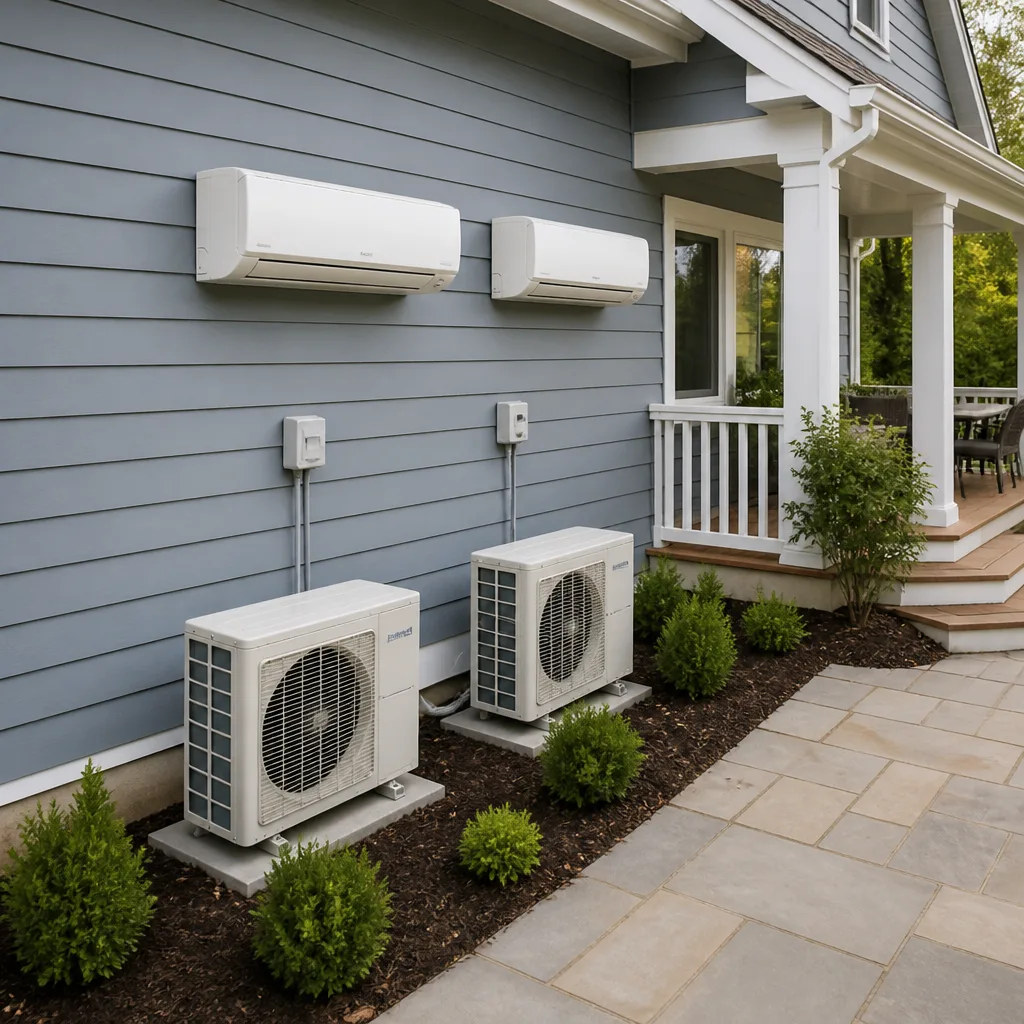
When slab ducts are beyond repair, a ductless heat pump (mini-split) often saves the day. Individual air handlers mount on walls or ceilings in the rooms that matter most, with no ductwork at all. For San Dimas ranch homes with ruined under-slab ducts, this route can be cheaper than a full duct replacement and far more efficient than pushing air through leaky concrete channels.
Trusted Brands We Service in San Dimas
Our San Dimas installs regularly include equipment from Daikin, Bryant, Carrier, and American Standard. These are the brands we stock parts for locally, which shortens the time between diagnosis and finished install when a component ships from the distributor. We’re certified to service the major lines and we install them with the same written price and written guarantee on every job. If a Bryant heat pump fits your hillside house better than a Daikin, the quote reflects the equipment, not our inventory. For San Dimas customers, that mix of local parts availability and brand flexibility means you’re not stuck waiting two weeks for a specialty valve while your house sits at 88 degrees.
See the difference
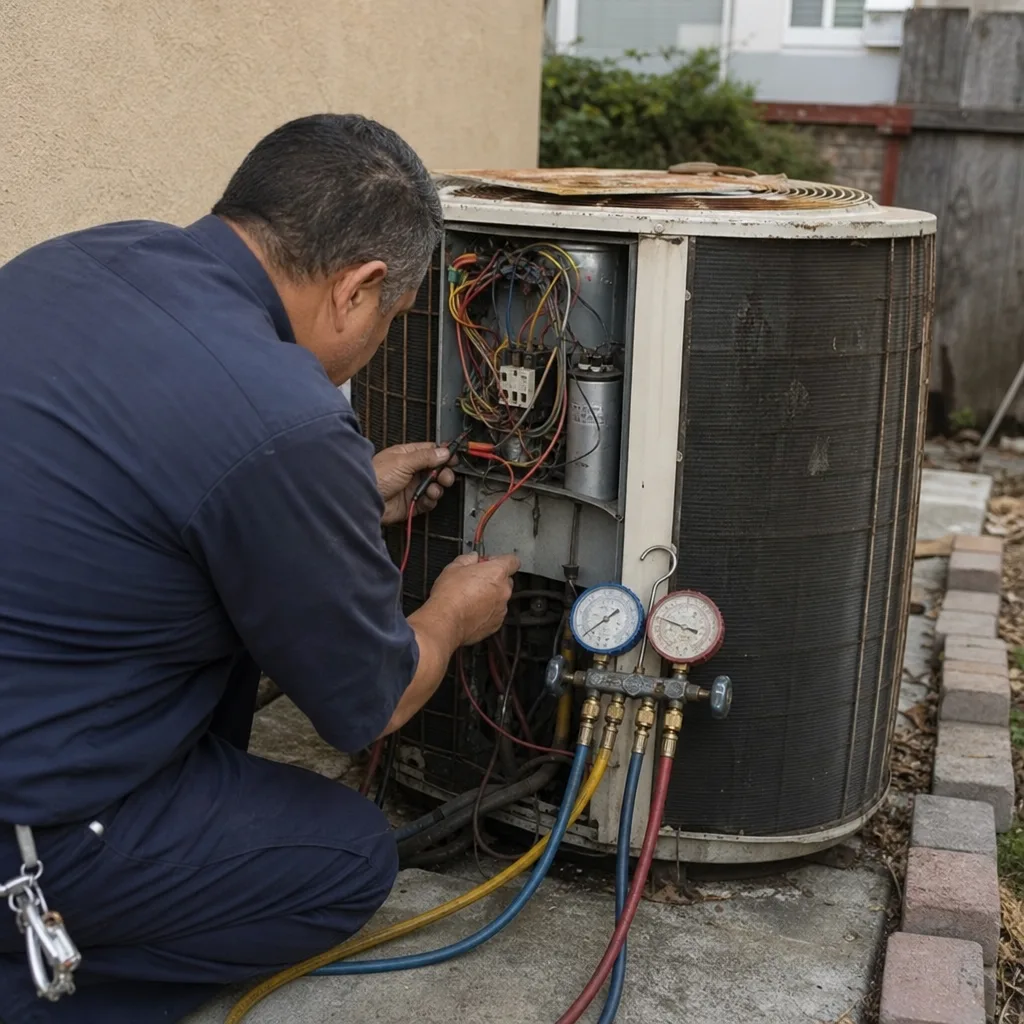 Before
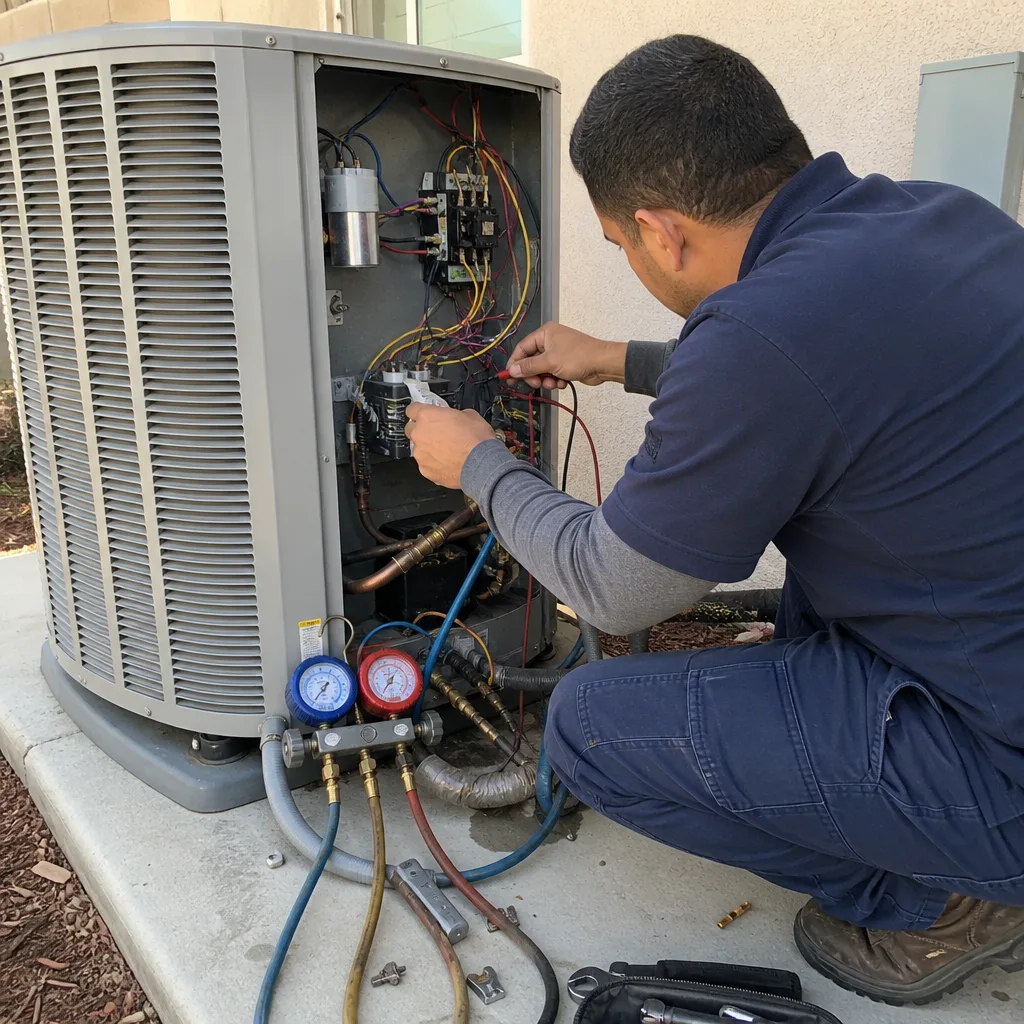 After
After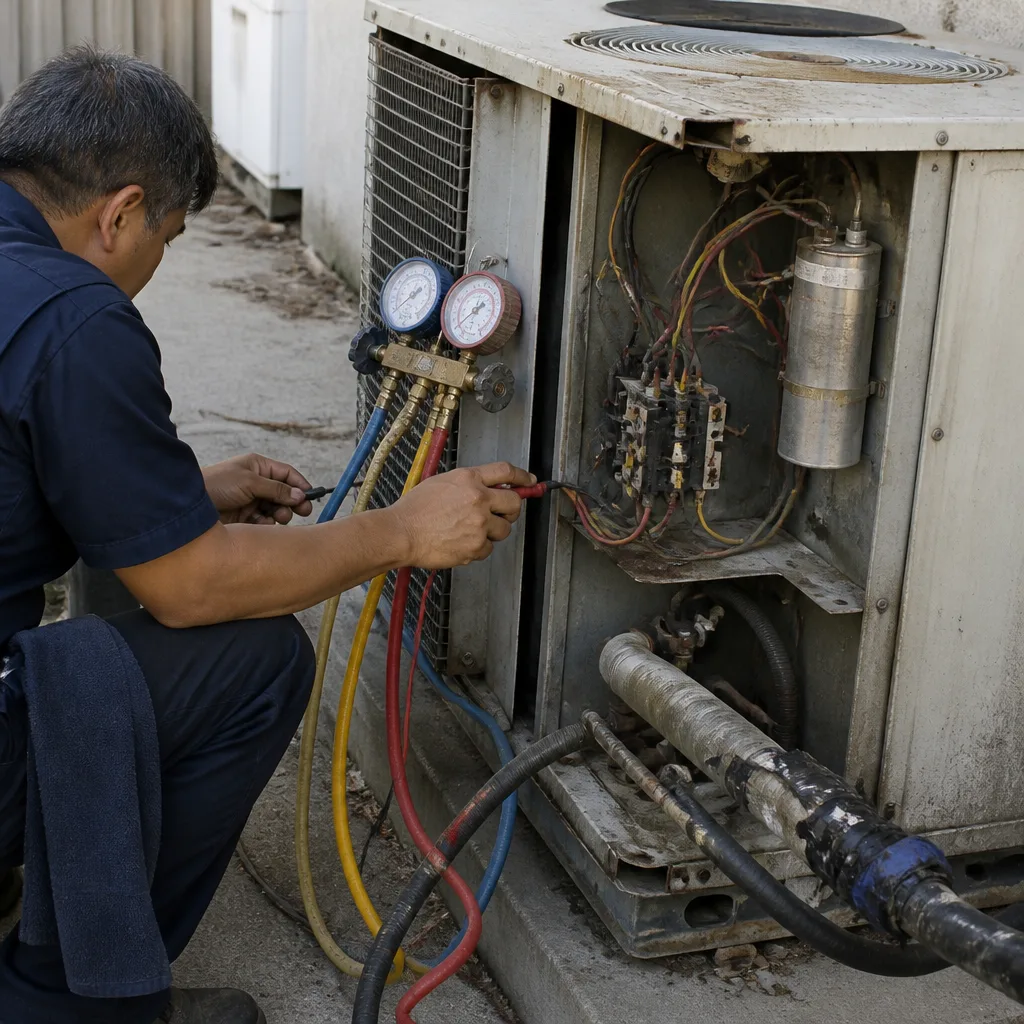 Before
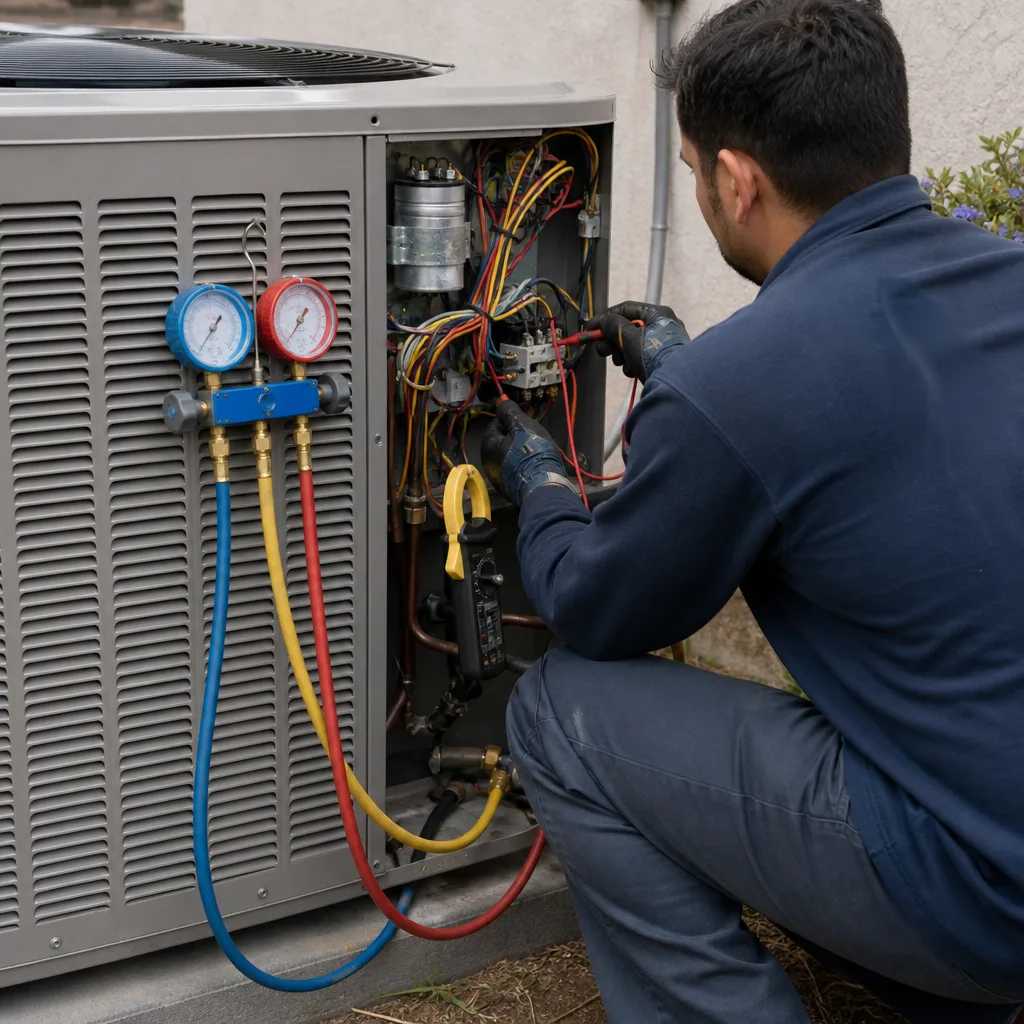 After
After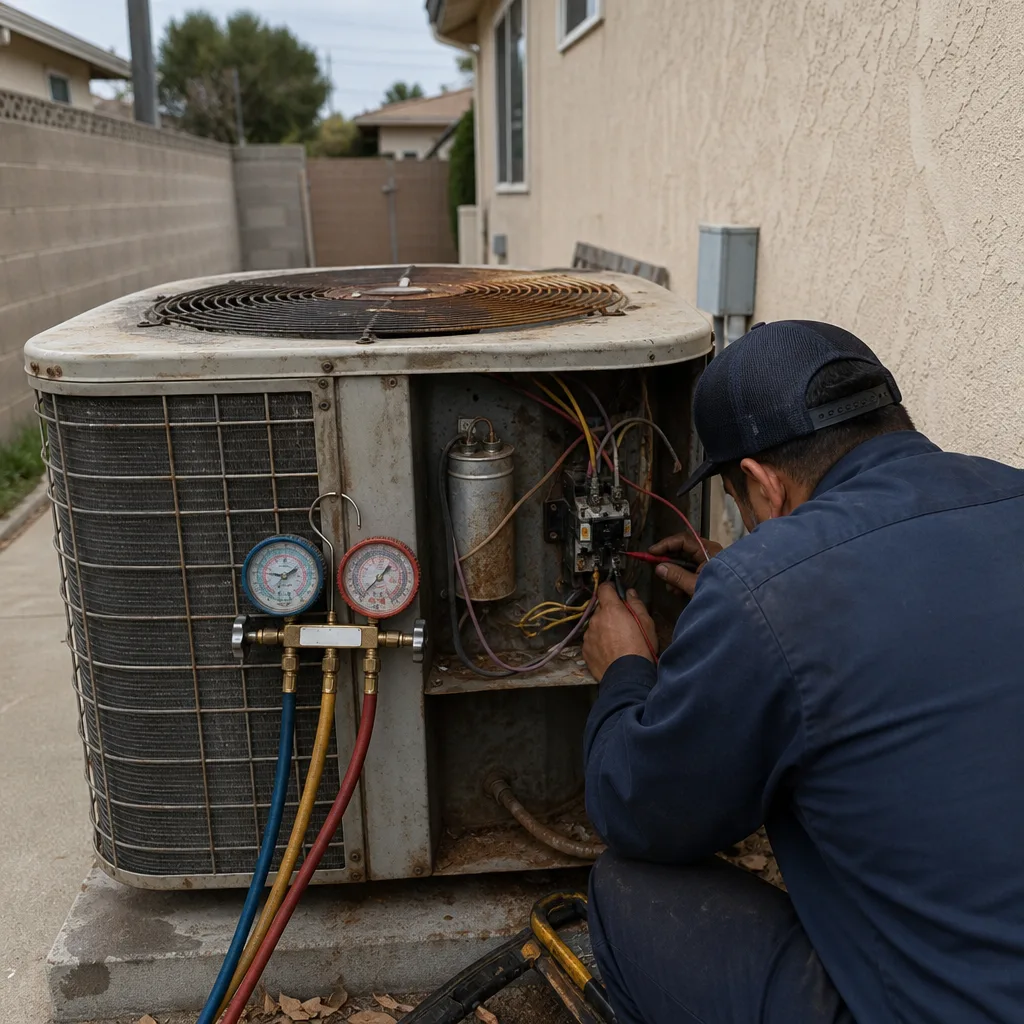 Before
 After
AfterCommon AC Installation Problems We See in San Dimas Homes
- Crushed or rodent-damaged slab ducts. The 1970s and 1980s homes that dominate San Dimas’s housing stock often hide ductwork under concrete slabs. Dry, shifting soil compresses and cracks those ducts over decades, and attic rodents add their own damage. We inspect before we install so the new system isn’t blowing conditioned air into the ground.
- Single-zone systems on two-story split-levels. Upstairs bedrooms routinely run 8 to 10 degrees hotter than downstairs during Santa Ana heat waves. Adding zoning during installation fixes this, but only if the install crew knows San Dimas’s split-level layout patterns and plans for the dampers and control wiring from day one.
- Undersized condensers on hillside lots without wind shelter. Hillside homes above Via Verde often have tight yards and no protection from afternoon heat. A condenser starved for airflow never hits its rated SEER2 efficiency and fails early. We position outdoor units with proper clearance or the whole install underperforms from the day it is switched on.
- Ignoring static pressure on original ductwork. A new high-efficiency blower motor pushing against collapsed or undersized duct runs will fail prematurely. We measure static pressure after sealing and before we call the job done. In San Dimas, the old ducts are usually the weakest link, not the new equipment.
Pricing for AC Installation in San Dimas, CA
Straight numbers, as promised. A full AC installation in San Dimas runs $3,500 to $7,500. That includes the equipment, installation labor, refrigerant charge, electrical connections, and a written guarantee on the completed work. A heat pump installation lands in the same $3,500 to $7,500 range, with the added benefit of handling your heating too. What pushes a quote toward the top of the range? Larger tonnage for a sprawling ranch, a high SEER2 rating like 18 or 20, zoning dampers for a two-story home, and ductwork sealing or repair discovered during inspection. What keeps it low? A simple single-zone swap with intact ductwork and a standard 14-15 SEER2 unit. Every quote we give is a written fixed price before any work starts. If you want a free estimate for your specific house, call us at (831) 607-5485 and we’ll book the visit.
| System | San Dimas Installed Price Range |
|---|---|
| AC Installation | $3,500 – $7,500 |
| Heat Pump Installation | $3,500 – $7,500 |
One note that applies to rural and hillside San Dimas properties: when you’re several miles up a winding road, the install day may include a little more labor time for equipment staging and tighter maneuverability. We factor that into the quote upfront, so the written number is the number you pay. No surprise line added at the door.
We Also Serve Cities Near San Dimas
Our AC Installation team handles homes across the San Gabriel Valley corridor. Beyond San Dimas, we regularly install systems in La Verne, Glendora, Covina, and Azusa. If your property sits on the edge of one of those cities and the zip code gets confusing, just call and we’ll confirm service coverage for your address.
Serving San Dimas, CA - Our Local Coverage Area
We’re based in the San Dimas area and know this community well. Use the map below to see our service coverage - if you’re nearby, we can almost certainly help.
FAQs About AC Installation in San Dimas
San Dimas’s dry, shifting soils compress and crack slab-on-grade ductwork from the 1970s and 1980s, and rodent activity adds further damage over the years. That’s why every install we quote in San Dimas includes a duct inspection before we size the equipment. If the under-slab ducts are compromised, the new system can’t perform, and we’ll tell you before you sign anything. Call (831) 607-5485 and we’ll inspect during the free estimate.
For most rural San Dimas homes on propane, yes. A heat pump eliminates the propane tank refill cycle for heating and runs on electricity, which is more stable in price and cleaner at the point of use. The sweet spot is a cold-climate heat pump sized correctly for a home with average insulation. If your property has outbuildings or workshops, we can zone those separately so the main house doesn’t subsidize heating a barn. Exact savings depend on your current propane usage and your Southern California Edison rate, and we’ll model that before you commit.
Because the upstairs gains heat through the roof and the downstairs stays cooler by default, a single-zone system leaves the second floor 8 to 10 degrees hotter during Santa Ana heat waves. Zoning uses motorized dampers and multiple thermostats to balance airflow between levels. In the Via Verde hills, our crew replaced a split-level system where a stuck zone damper had the upstairs at 82°F and the downstairs at 68°F. After we installed new dual-zone dampers and verified airflow, both floors held steady within two degrees. If your home has two stories and one thermostat, zoning is not optional, it’s the fix. Call (831) 607-5485 for a free assessment.
On an exposed San Dimas hillside with full afternoon sun and no wind shelter, we recommend a minimum of 16 SEER2, and 18-20 SEER2 if the budget allows. The higher rating means the unit moves more heat per watt, which matters when the condenser sits in direct afternoon heat with limited airflow. We also verify the coil clearance before finalizing the install plan. A high-SEER2 unit installed against a wall with no airflow gets you the worst of both: a premium price and mediocre efficiency.
For detached garages, workshops, and ADUs on rural San Dimas lots, the cleanest solution is usually a ductless mini-split sized to the square footage and use pattern of the outbuilding. We run a small load calculation, install a wall-mounted indoor unit, and set the outdoor condenser where it gets proper clearance. This avoids running new ductwork to a detached structure and lets you condition the workshop only when you’re actually using it. Call (831) 607-5485 and we’ll include the outbuilding in your free estimate.
Written by Andre Fuller, Owner at Halden Heating and Air West Covina, serving San Dimas since 2004.